

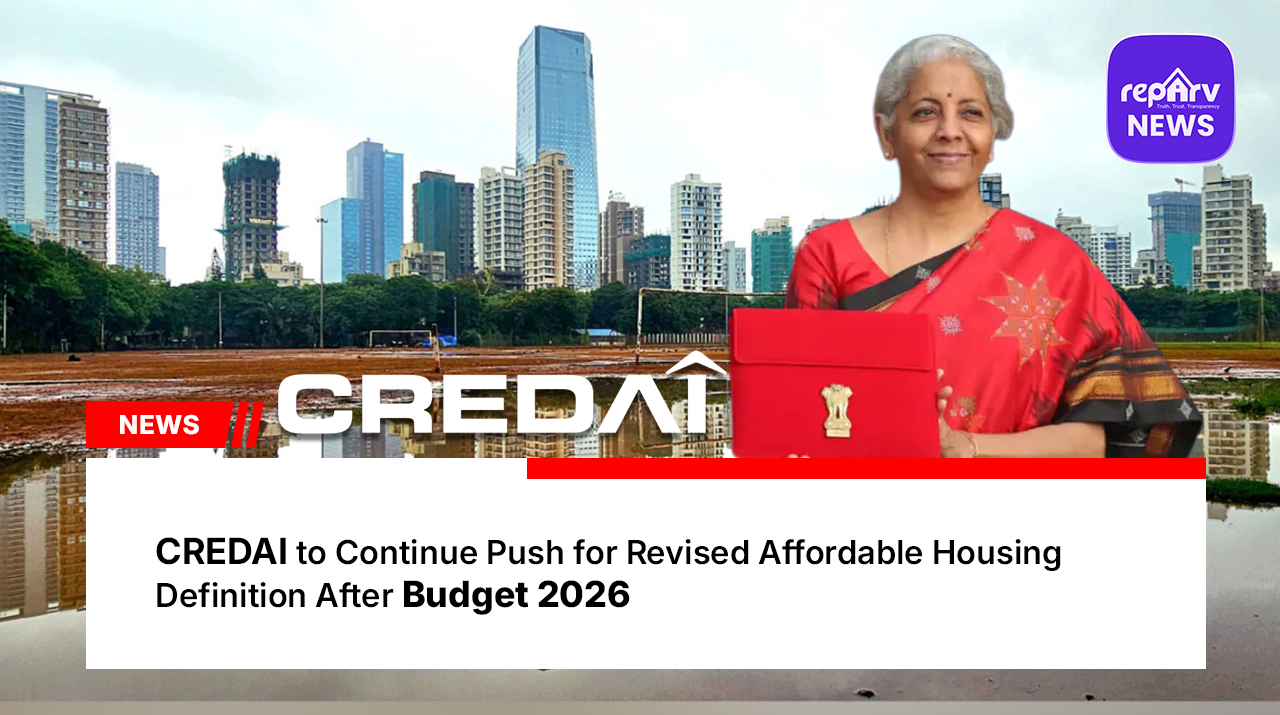
The Confederation of Real Estate Developers’ Associations of India (CREDAI) will continue to lobby the Union Government for a change in the definition of affordable homes. This decision was announced by the President of the Association, Mr. Shekhar Patel. Patel expressed disappointment, saying that the Union Budget 2026 failed to address the long-standing concerns of the developers on the subject.
Patel made these observations during a media interaction session conducted in Nashik. According to him, the real estate industry itself had placed considerable hopes on the Budget during the year, especially with regard to affordable housing. Although the government’s focus on infrastructure development was appreciated, the lack of direct intervention for affordable housing remains a cause of concern.
The core requirement put forward by CREDAI is to revisit the current definition of affordable housing, which came into place in 2017. According to the current regulations, affordable housing is defined based on room area, which is 60 sq. meters in metropolitan cities and 90 sq. meters in non-metro cities, along with a price cap of ₹45 lakh. Housing units falling within this limit would be eligible to avail a concessional GST rate of 1%, without input tax credits, whereas housing units exceeding this cap would incur a GST rate of 5%.
Patel further said that the ₹45 lakh limit has remained the same over the past nine years. However, this limit no longer reflects the realities of the market. “With the increase in prices of land, construction costs, compliance, and the general rise of inflation over the period of time since the definition was framed, the viability of projects has been greatly affected. In fact, with the shifting realities of the market, the feasibility of projects within the limit of ₹45 lakh has become unviable in many markets.”
Industry data on trends over the last few years indicate that there has been a reduction in the proportion of affordable houses as a percentage of overall residential stock. As stated in recent assessment reports on the housing market and the findings mentioned in the Economic Survey 2025, the proportion of houses that were priced under ₹50 lakh has reduced significantly in comparison to the levels of 2018. There has been a growing trend among builders to construct more in the mid- and premium-end segment.
Patel explained that it has been communicated to the government that the definition of ‘affordability’ should be aligned more closely with the cost structure prevailing today. One of the options being considered is to delink the definition from the price band concept and incorporate parameters of size and other city-specific parameters. This would expand the pool of projects eligible for incentives, thereby providing a boost to the entry-level segment.
Apart from redefining the concept of affordability, CREDAI has reiterated its broad guidelines, which include the rationalisation of GST on building materials, increased tax benefits for home buyers, and the implementation of credit support for first-time buyers. The organisation has also recommended improvements in the liquidity of developers in affordable housing projects.
Market participants have contended that without policy support, the affordable segment of housing might continue shrinking, especially for aspiring homeowners in the lower- or middle-income groups of the population. This sector was earlier given a boost through initiatives like the Pradhan Mantri Awas Yojana (PMAY) and associated interest subsidy support. However, as costs have risen, housing developers say definitions must also be updated accordingly.
Real estate Analysts said clarity on affordable housing policy will not only help developers but also financial institutions and investors. It is expected that a revised framework could affect lending norms, tax treatment and investment flows to residential projects targeted at first-time buyers.
Despite the Budget not directly addressing the issue, Patel said that CREDAI would continue its dialogue with the Ministry of Housing and Urban Affairs, the Ministry of Finance, and other stakeholders. He underlined the fact that affordable housing remains key to the inclusive growth of cities and economic stability, especially while India's cities keep growing and the demand for housing is increasing.
Consultations between industry representatives and government officials are likely to continue well into the coming months as the sector strives for alignment between policy definitions and on-the-ground realities. The outcome of the discussions may arguably influence the accessibility and affordability of urban housing for millions of prospective homeowners in the next few years.





.webp)
.webp)
.webp)

.webp)



.webp)
.webp)
.webp)
.webp)
















.webp)
.webp)


.webp)

.webp)
.webp)
.webp)
.webp)
.webp)
.webp)
.webp)



























.jpeg)