

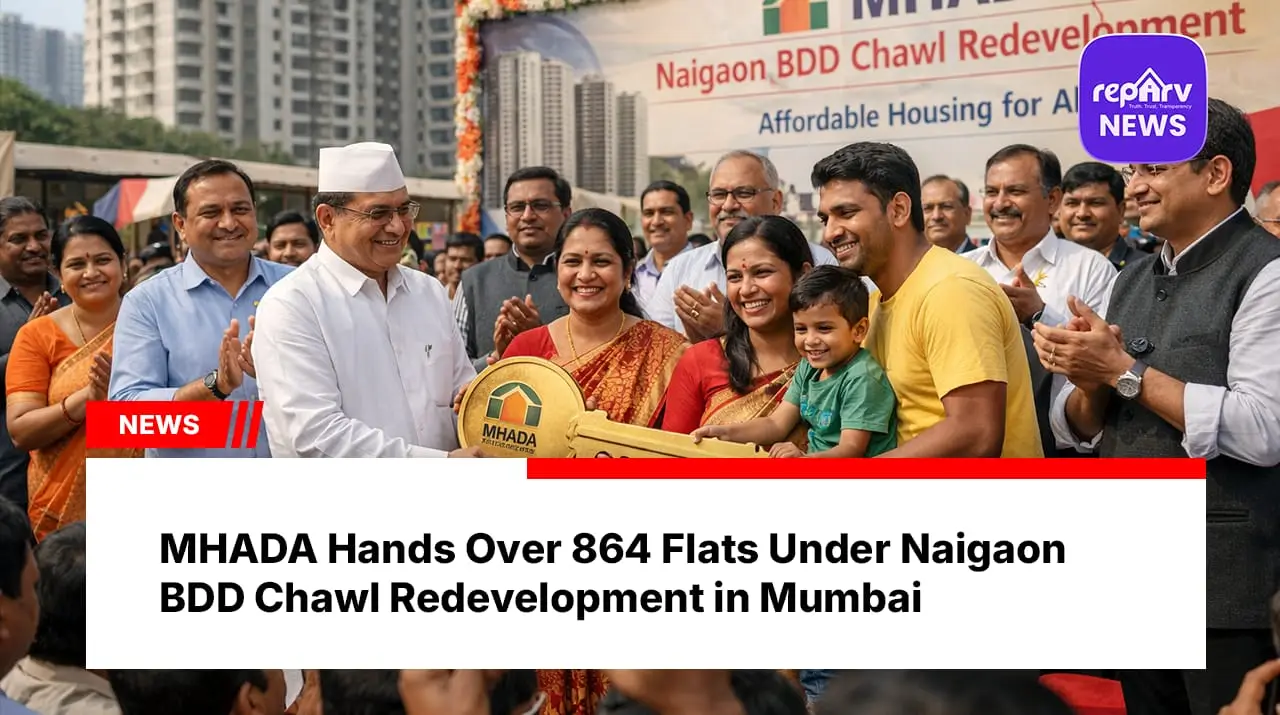
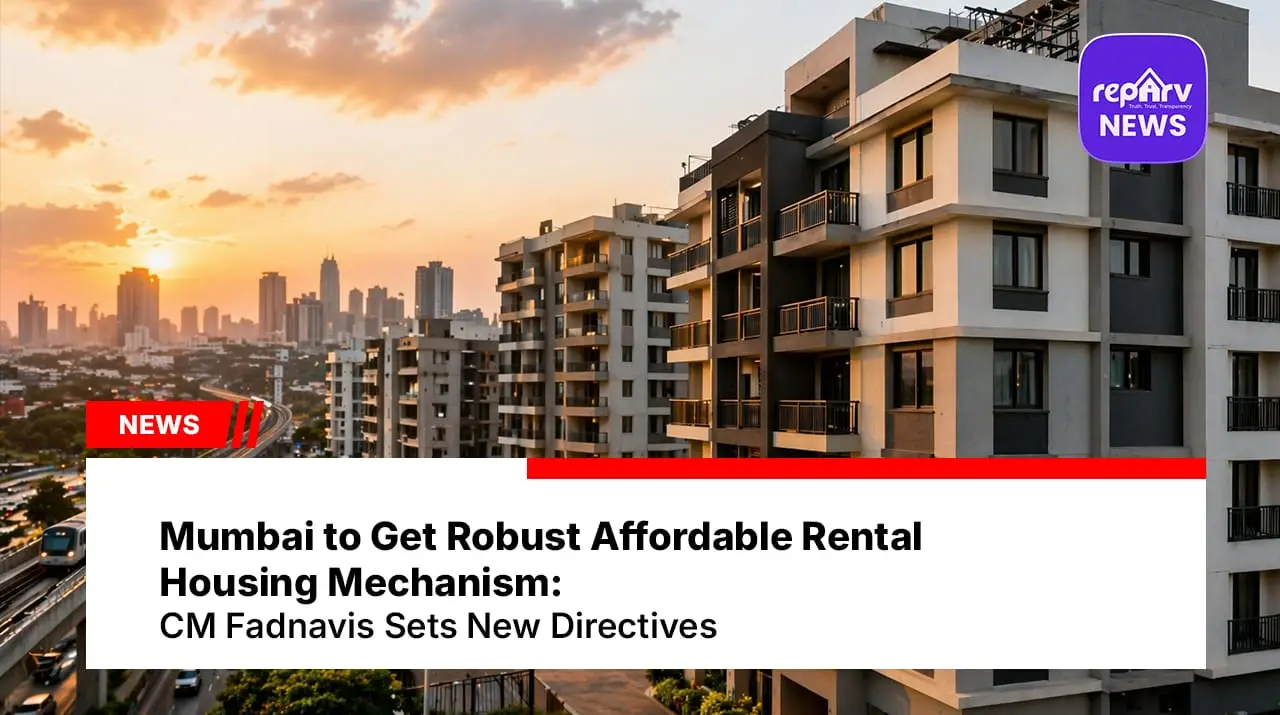
In a major milestone for the redevelopment of housing infrastructure in Mumbai, the Maharashtra Housing and Area Development Authority (MHADA) has handed over keys to 864 newly constructed flats to the beneficiaries of the Naigaon BDD Chawls redevelopment project on March 16, 2026, with the presence of Maharashtra Chief Minister Devendra Fadnavis, bringing the city closer to its goal of redeveloping its historic chawl housing infrastructure.
The newly constructed flats are part of the Dr Babasaheb Ambedkar BDD Complex in Naigaon, which is in the Dadar region of central Mumbai. The redevelopment of housing infrastructure has been one of the major initiatives of the government, aiming to provide housing for thousands of residents of old chawls with better infrastructure and amenities.
The Naigaon BDD complex presently accommodates 3,344 tenants who live in the 42 chawls. Each of the chawls comprises a ground floor plus three upper floors. They are built over an area of 6.45 hectares. In the redevelopment project, the old structures have been demolished to make way for new constructions. In their place, high-rise rehabilitation towers of 23 floors each will be constructed. There will be a total of 20 such towers in two phases.
The flats handed over to the tenants this week comprise 864 units in five towers under the first phase of the redevelopment of Plot ‘B’. In total, the first phase will provide rehabilitation to 1,401 people. The remaining flats will come up by April 2026.
The event was organised by MHADA and marked the handover of ownership of the flats to the longtime tenants who have been living in cramped spaces for decades. Many of the residents have been living in single-room tenements of approximately 160 square feet, which were typical of the original BDD chawls built by the British. They have been living in these spaces for two or three generations.
As part of the redevelopment benefits, each eligible tenant is being offered a much larger, modern apartment, with a carpet area of about 500 square feet, thereby greatly improving living conditions. The modern apartments include several upgraded facilities, such as vitrified flooring, upgraded plumbing, a modern kitchen, elevators, fire safety, and surveillance.
As part of the redevelopment, the buildings have been designed with earthquake-resistant technology and include CCTV surveillance on every floor, lifts, and parking facilities. As part of the redevelopment complex, several community facilities have been included, such as schools, welfare facilities, rainwater harvesting, and solar energy.
Speaking at the function, Chief Minister Devendra Fadnavis said that the redevelopment of BDD chawls had not been taken seriously for several decades, and the state government has taken up the cause by pushing the redevelopment through MHADA. He urged the people not to sell the flats they have been allotted, stating that they have been allotted in the most prestigious areas in central Mumbai.
The BDD Chawl redevelopment project is considered one of the largest in India, covering nearly 200 chawls in Worli, Naigaon, and NM Joshi Marg. The area redevelopment project needs to restore 15000 families who currently live in outdated housing complexes.
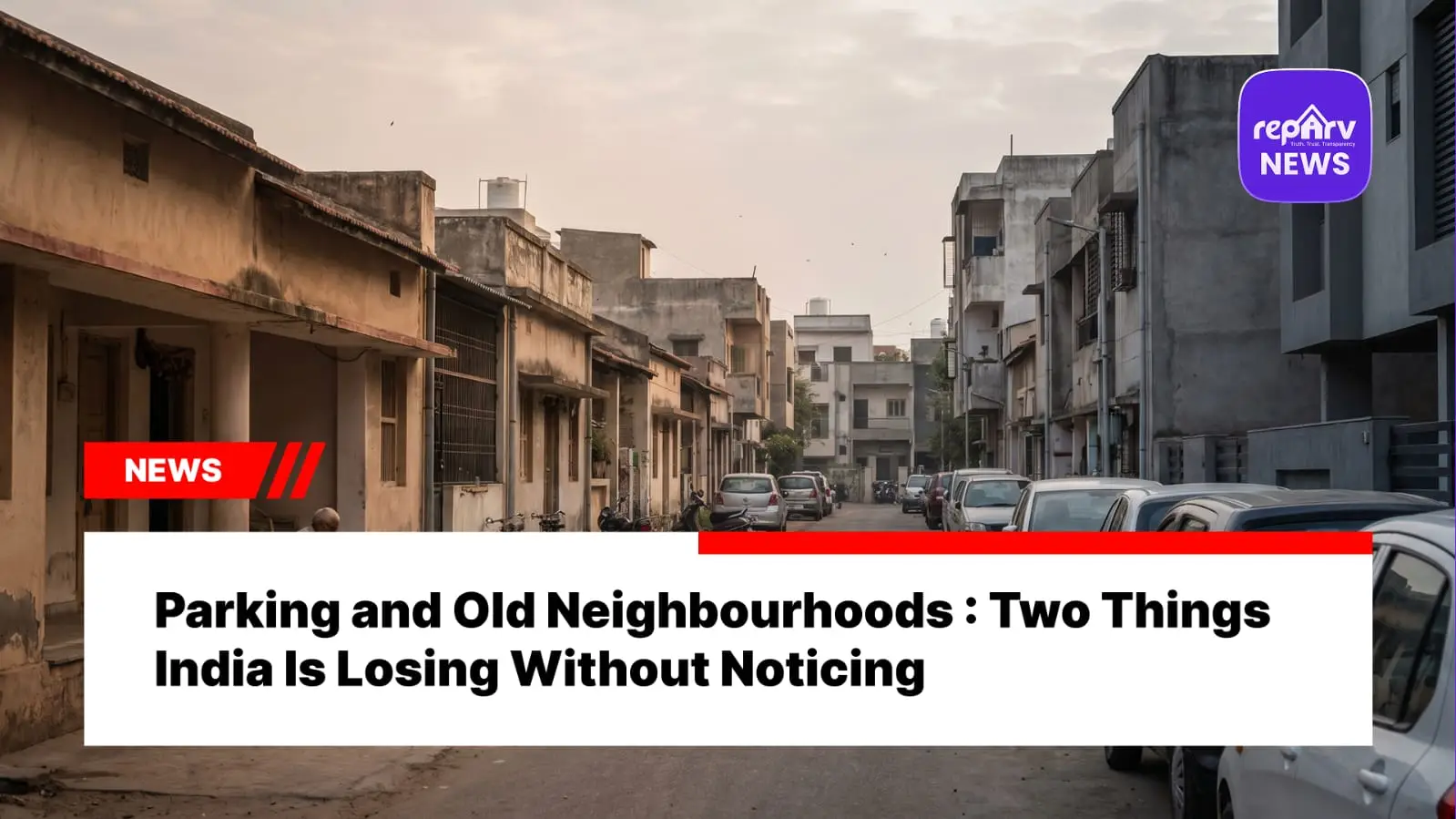
The British government constructed the BDD chawls between 1920 and 1925 to create residential housing for workers who needed accommodations near mills, railways and ports. However, over the years, the structures have been in a state of disrepair due to ageing infrastructure and overcrowding. It was decided to undertake the redevelopment of the area. MHADA was given the task of redeveloping the area close to a decade ago. Some of the major construction companies that have been involved in the redevelopment of the area include Larsen & Toubro. A similar redevelopment project is also underway in the Worli and NM Joshi Marg area.
The authorities have announced that the rehabilitation of all eligible beneficiaries of the BDD Chawl redevelopment project will be completed by 2029, with some of Mumbai’s oldest working-class housing clusters being redeveloped into modern residential areas.
Insight: Why the BDD Chawl Redevelopment Matters for Mumbai’s Real Estate
The delivery of 864 flats in Naigaon functions as a housing accomplishment that showcases the current development progress of Mumbai's urban renewal projects. Traditionally, Mumbai’s redevelopment industry has been dominated by private players, which has led to delays.
In this regard, the BDD Chawl transformation is significant because it unlocks prime land in central Mumbai for vertical residential development while rehabilitating the original inhabitants. For Mumbai’s real estate market, such cluster redevelopment schemes could define the future of the city’s housing market by providing space for high-density residential complexes in place of ageing low-density residential areas, without relocating their inhabitants to the peripheries of Mumbai.
If successful, the redevelopment of BDD Chawl could serve as a template for rehabilitating other ageing residential clusters in Mumbai and across metropolitan cities in India.




.webp)
.webp)
.webp)

.webp)

.webp)
.webp)
.webp)
.webp)







.webp)
.webp)


.webp)
.webp)
.webp)
.webp)
.webp)
.webp)
.webp)
.webp)






















.jpeg)