

A Major Crackdown on Real Estate Misconduct
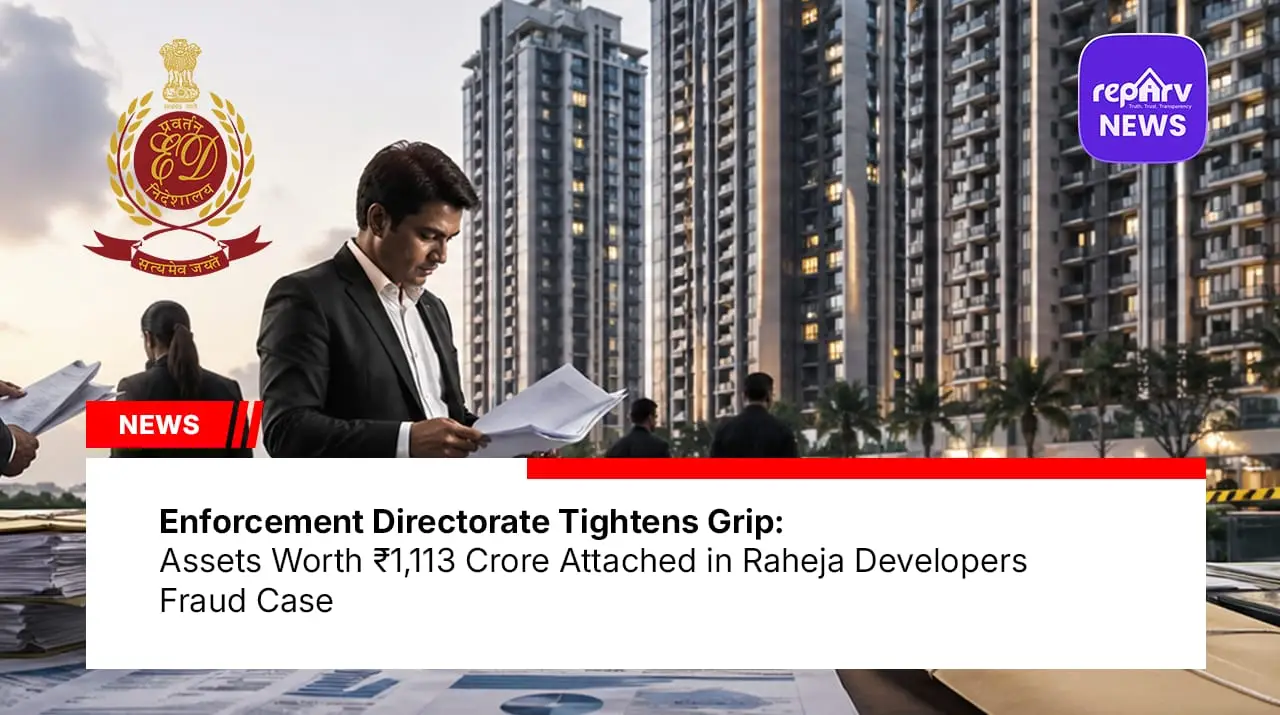
The Enforcement Directorate (ED) has sent shockwaves through the NCR property market by provisionally attaching immovable properties valued at approximately ₹1,113.81 crore linked to Raheja Developers Ltd. This decisive action, taken on April 28, 2026, marks a significant escalation in the federal agency's investigation into alleged financial irregularities and the systemic defrauding of thousands of homebuyers. The properties targeted in this attachment order belong to related entities, specifically N.A. Buildwell Pvt. Ltd. and Riyasat Palaces Ltd., alongside personal assets owned by the company’s Chairman and Managing Director, Navin M. Raheja, and his family members.
Unmasking the Image: Symbols of Stalled Dreams
The visual evidence accompanying these reports often depicts the skeletal remains of high-rise structures—specifically the Raheja Revanta project in Gurugram. The photo typically shows a 61-storey tower standing in a state of semi-completion, surrounded by construction cranes that have long fallen silent. For the public, this image serves as a stark symbol of the "stalled project" crisis in India. It captures the physical manifestation of the Prevention of Money Laundering Act (PMLA) investigation: luxury facades that remain uninhabitable despite years of buyer payments, highlighting the gap between glossy marketing brochures and the gritty reality of site abandonment.
The Scope of the Alleged Homebuyer Fraud
The roots of this legal storm lie in a staggering sum of money collected under the guise of residential development. According to the ED’s findings, Raheja Developers allegedly amassed approximately ₹2,425.99 crore from nearly 4,600 homebuyers across various projects. The investigation, which stems from multiple FIRs registered by the Economic Offences Wing (EOW) of the Delhi Police, suggests that instead of these funds being utilized to complete the promised homes, a "substantial portion" was systematically siphoned off. These funds were reportedly routed through a labyrinthine network of shell companies and related entities, ultimately finding their way into accounts controlled by the promoters and their close associates for purposes entirely unrelated to construction.
Recent Raids and the Seizure of Luxury Assets
This massive attachment follows a series of high-intensity searches conducted by the agency. Just days prior, on April 25, 2026, ED sleuths raided multiple locations across Delhi-NCR, including Sainik Farms and New Friends Colony. These operations were remarkably productive for the investigators, resulting in the seizure of bullion and jewellery valued at ₹15.82 crore, along with substantial amounts of foreign currency. These seizures, combined with the earlier raids in June 2025, have provided the agency with what it describes as "incriminating digital evidence" and financial records that detail the alleged diversion of buyer funds.
Also read: UP-RERA Overhauls Rules: Relief for Buyers in Unregistered Projects and Caps on Transfer Fees
The Developer’s Defense: Infrastructure and Audits
In response to these severe allegations, Raheja Developers has maintained a stance of absolute denial regarding any criminal wrongdoing. The company’s leadership argues that a RERA-supervised forensic audit has already confirmed that more capital was invested into their projects than what was actually collected from customers. According to the developer, the primary cause of project delays—particularly for the landmark Raheja Revanta—is not financial mismanagement but a chronic failure of government infrastructure. They claim that despite paying hundreds of crores in External Development Charges (EDC), essential services like electricity, water, and sewerage remain unavailable, making it legally and safely impossible to hand over possession to buyers.
Broader Implications for the Real Estate Sector
This billion-rupee attachment is a bellwether for the increasing regulatory scrutiny facing the Indian real estate market. As the ED continues to trace the "proceeds of crime," the case against Raheja Developers serves as a cautionary tale for the industry. It highlights a tightening noose around developers who fail to maintain the sanctity of escrow accounts and buyer trust. For the 4,600 families caught in this crossfire, the legal battle represents a desperate hope for either the completion of their homes or the recovery of their hard-earned savings. As the trial moves forward under the PMLA, the focus remains on whether justice will translate into physical possession for the long-suffering homebuyers.






.webp)
.webp)
.webp)

.webp)




.webp)
.webp)
.webp)
.webp)












.webp)
.webp)


.webp)

.webp)
.webp)
.webp)
.webp)
.webp)
.webp)
.webp)


























.jpeg)