

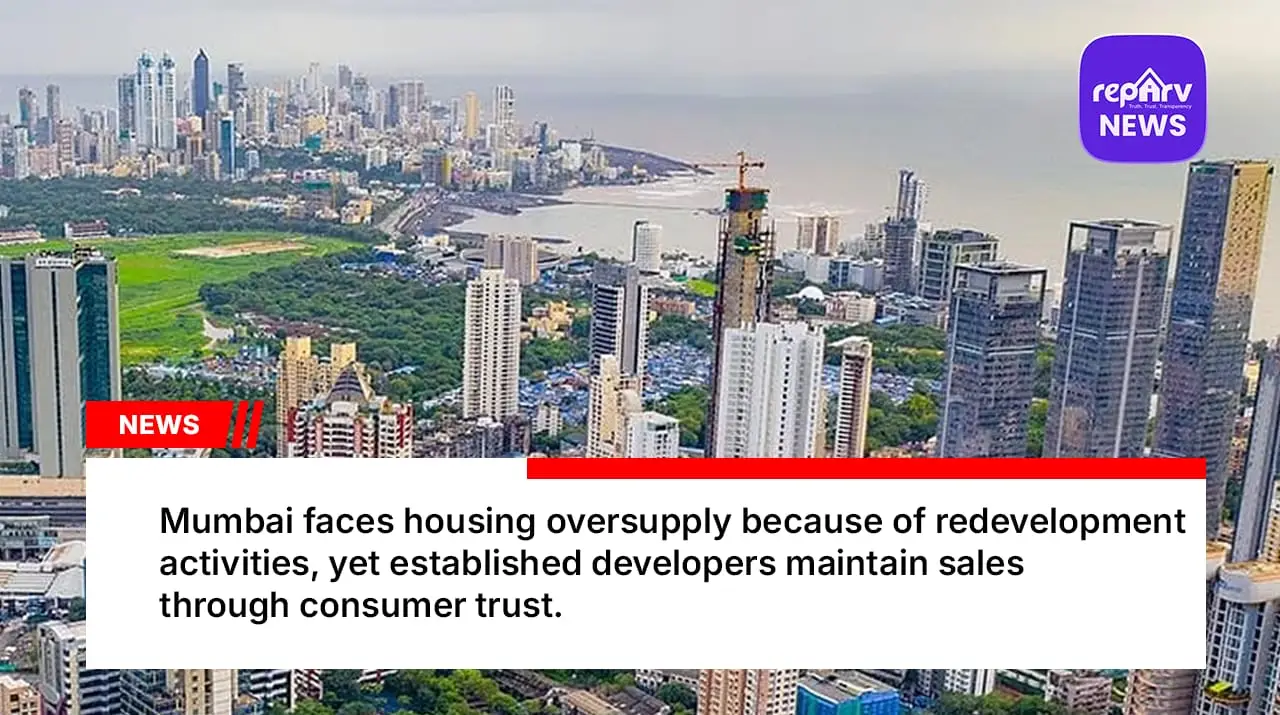
The residential real estate market in Mumbai is currently facing a localised situation of oversupply due to the redevelopment trend, but trust in established developers keeps the sales momentum going. Industry insights and recent market trends suggest that while some micro-markets in the city are experiencing a surge in inventory levels, overall market confidence in established developers continues to sustain sales momentum.
During a recent earnings call, Abhishek Lodha, Managing Director and Chief Executive Officer of Lodha Developers, pointed out that while some corridors of the city, especially in the suburban regions where massive redevelopment of societies is taking place, are experiencing a surge in supply, walk-ins, inquiries, and sales bookings for branded projects are meeting internal sales projections.
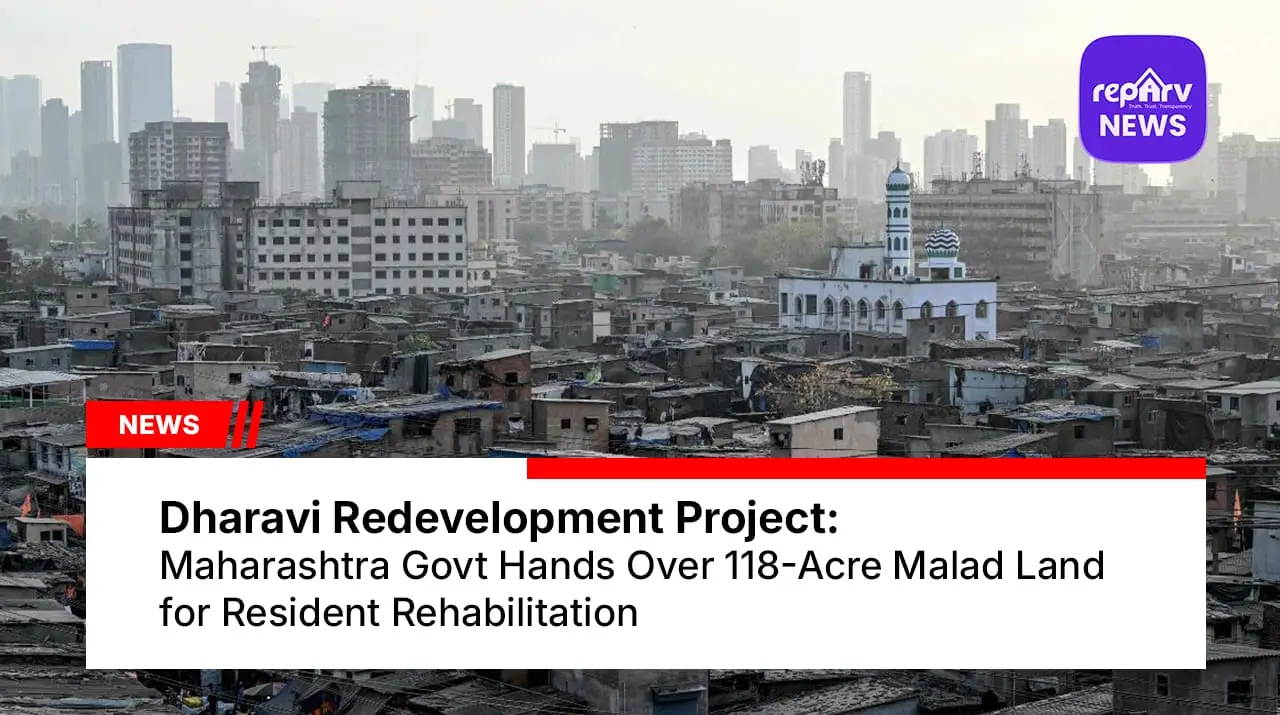
The redevelopment cycle in Mumbai has picked up pace over the last few years, as old housing societies decide to redevelop themselves to tap into additional space allowed by the new development rules. According to a report by Knight Frank India, the redevelopment deals inked since 2020 are likely to yield over 44,000 new units in the Mumbai Metropolitan Region by 2030, with a market value of approximately ₹1.3 lakh crore. The magnitude of this pipeline indicates the challenge and the opportunity that is arising in established areas.
The Western and Central suburbs of Mumbai, including Andheri, Bandra, Borivali, Malad, and Ghatkopar, have turned out to be the major redevelopment centres because of the large number of old residential societies in these areas. As projects are reaching the launch and completion stages at the same time, some micro-markets are witnessing a rise in the number of unsold units. Experts say that this is because of the concentration of projects in these areas, and not because of a demand slowdown in the city.
Despite such additions to the supply side, Lodha pointed out that consumer demand remains skewed towards reliable developers who have the ability to deliver. This is because, in Mumbai, especially in projects where redevelopment is taking place, buyers are quite particular about timelines, quality of construction, and legal aspects, which are likely to work in favour of larger, organised players. This, according to industry experts, is leading to consolidation in the sector, with better-funded developers cornering a larger market share.
However, the overall housing market data also shows a change in the composition of demand. It is seen that the sub-₹75 lakh housing market has shown a moderation in supply as well as sales, which is affecting the overall transaction numbers in the city. Developers who are less dependent on the budget segment seem to be less impacted by this trend, while mid-range and luxury segments are attracting relatively stronger demand.
The development that is fueled by redevelopment is also a result of structural imperatives that are specific to Mumbai. Since there is a scarcity of greenfield land parcels available within the city, redevelopment is one of the few options available to boost the supply of housing. The study by Knight Knight Frank highlights that this approach not only helps to boost supply but also helps to revitalise the city by replacing outdated infrastructure with new residential complexes. The concentration of such projects in certain suburbs would create a temporary shortage of supply, which would disrupt the normal flow of supply and demand for that particular area.
Recent statements made by key developers indicate that there is optimism about the demand for housing. For example, Lodha Developers has indicated that it will soon develop projects with high gross development value, which indicates that there is optimism about the absorption of housing units. These expansion plans have been seen as a sign of confidence in the underlying demand fundamentals in Mumbai, which are driven by end-users, upgraders, and investors.
Market research analysts report that Mumbai residential market transaction volumes will vary based on interest rate changes and economic cycles, but the market maintains strong structural demand because of employment creation, infrastructure expansion and land supply limitations. The current spate of redevelopment activity is perceived as a combination of government-driven incentives and the need for housing societies to provide contemporary amenities and upgraded safety standards for buildings.
Thus, the current scenario is a complex one, rather than a market-wide downturn. Although there may be temporary inventory accumulation in specific pockets due to overlapping project launches, demand for projects developed by established brands with robust execution track records is relatively more robust. Market observers indicate that homebuyers are increasingly becoming discerning, with a focus on project locations, developer credentials, and construction progress rather than pure speculation.
Mumbai, as it continues to manage the supply-side momentum fueled by redevelopment activity, seems to be entering a phase of consolidation where size, governance, and brand strength become the decisive factors. Currently, the Mumbai real estate market seems to embody a paradox – pockets of increased supply in redevelopment zones, alongside steady demand for credible and favourably located residential projects.






.webp)
.webp)
.webp)

.webp)

.webp)
.webp)
.webp)
.webp)










.webp)
.webp)


.webp)
.webp)
.webp)
.webp)
.webp)
.webp)
.webp)
.webp)





















.jpeg)