

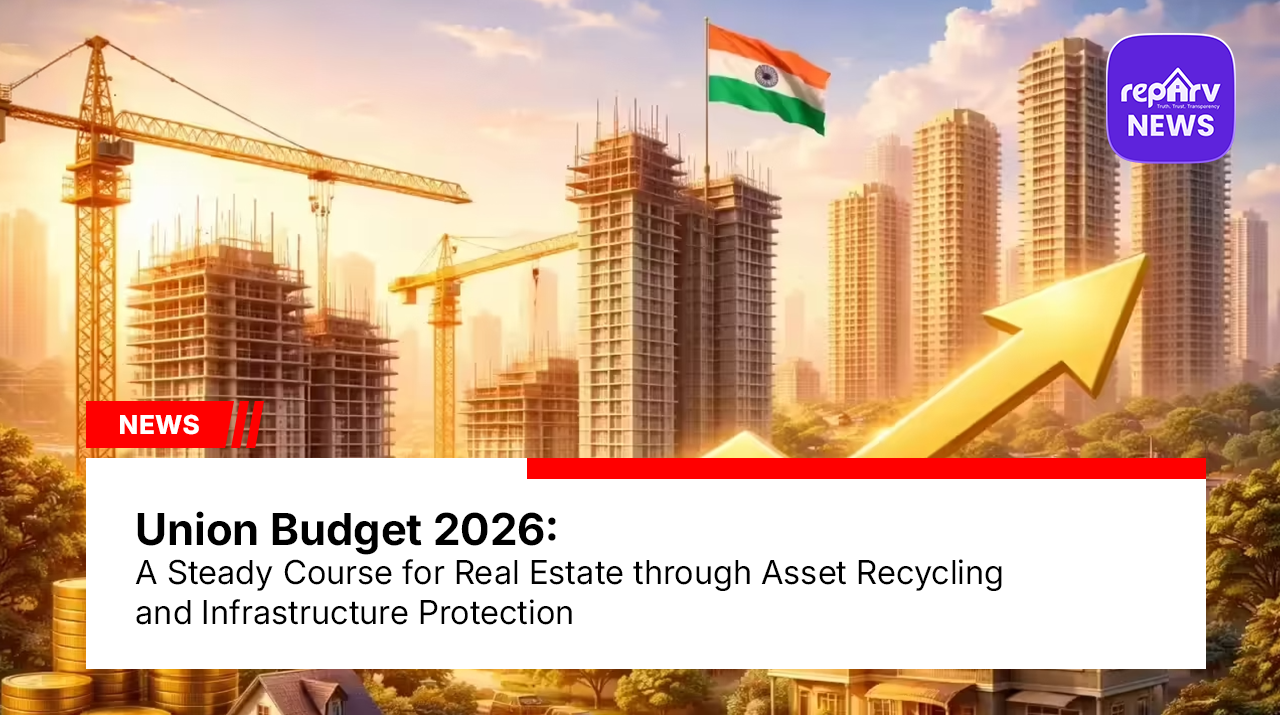
The Union Budget 2026 emphasizes long-term growth in real estate rather than looking for short-term wins. The emphasis this time has shifted to generating demand through asset recycling, improved project financing, and the development of Tier-2 and Tier-3 markets rather than offering new tax incentives to homebuyers.
The budget sticks to the government’s big-picture plan for infrastructure. And has earmarked ₹12.2 lakh crore for public sector capital expenditure, making it clear that real estate’s role is to support downstream activity rather than rely on handouts.
Asset Recycling Through CPSE-Backed REITs
The biggest development for real estate this year is that the government plans to allow Real Estate Investment Trusts (REITs) to tap into a pile of underused assets owned by Central Public Sector Enterprises (CPSEs). This includes neglected office buildings, vacant warehouses, and commercial property, as well as large tracts of land that have been underutilized for years.
By bringing these properties into the hands of REITs and other regulated investment tools, the government finally plans to circulate the money in the market. The unlocked capital can then be redeployed into new infrastructure and development projects.
It’s a move that should push India’s REIT market forward, attract big institutional investors for the long haul, and make commercial real estate deals a lot more transparent.
Industry experts see it as a real shift. This isn’t just a one-off change—it is the kind of reform that could stimulate demand for income-generating assets such as office parks, logistics centers, and emerging business hubs across city centers and suburban corridors.
Infrastructure Risk Guarantee Fund to Ease Project Financing
Funding has always been a headache for big infrastructure and real estate projects. To address this, the budget has proposed the Infrastructure Risk Guarantee Fund, which aims to provide partial credit support during the riskiest phases of development.
Developers, especially those involved in large townships or complex urban renewal schemes, understand these risks all too well. Long timelines and lots of uncertainty make banks nervous. This new fund should make lenders more comfortable, which means cheaper loans and better access to long-term cash for builders.
This initiative is in addition to existing institutional funding mechanisms and is part of a larger policy effort to enhance certainty of execution and overcome delays that have traditionally impacted the sector and undermined buyer sentiment.
Tier-2 and Tier-3 Cities Move to the Spotlight
The other major thrust area of Budget 2026 is the planned growth of urban areas through the development of City Economic Regions (CERs). The idea here is to create large urban-industrial hubs, which will integrate housing, employment, logistics, and transport planning rather than developing them in silos.
Construction Ecosystem Support and Cost Stability
While the budget does not offer special subsidies for developers, it continues to strengthen support for local manufacturing and small businesses linked to infrastructure and construction. Boosting the local supply chain for building materials and equipment is a great way to keep costs down and is a very important aspect, especially when it comes to affordable and mid-income housing projects, where every rupee counts. However, at the same time, a more developed local ecosystem will also enable developers to manage their costs effectively, and this will ensure that the entire process of housing delivery remains stable in the long run.
No New Tax Incentives for Homebuyers
Contrary to certain expectations in the real estate sector, the budget does not provide any new tax deductions or direct financial incentives to homebuyers. The existing tax provisions for housing loans and ownership are the same. This indicates that the government is looking to generate housing demand through infrastructure development, transport, and supply chain development, and not through tax incentives.
It’s a shift in focus and could be the beginning of something new. Although the lack of direct incentives might have a short-term effect on the sentiment of first-time homebuyers, it appears that the government is doing the right thing to generate conditions for sustainable growth.
Real Estate Growth Tied to Execution
According to market analysts, the overall success of Budget 2026 for the real estate industry will depend on the execution timeline. The monetization of assets via REITs, risk guarantee mechanisms, and economic regions in cities will require coordination between different ministries. Commercial real estate, such as office and logistics real estate, is likely to respond quicker than residential real estate.
Long-Term Outlook
Looking ahead, the government is treating real estate as a foundation of long-term transformation, rather than just a quick intervention. While the focus is on capital recycling, financial protection, and decentralized urbanization, the government mainly intends to create a stronger and more transparent real estate sector.
Although the short-term benefits may not be substantial, the policy framework is conducive to sustained growth in commercial properties and new-age urbanization, thus reiterating the importance of real estate in the overall economic development story of India.






.webp)

.webp)
.webp)

.webp)

.webp)
.webp)
.webp)
.webp)














.webp)
.webp)


.webp)

.webp)
.webp)
.webp)
.webp)
.webp)
.webp)
.webp)




























.jpeg)