

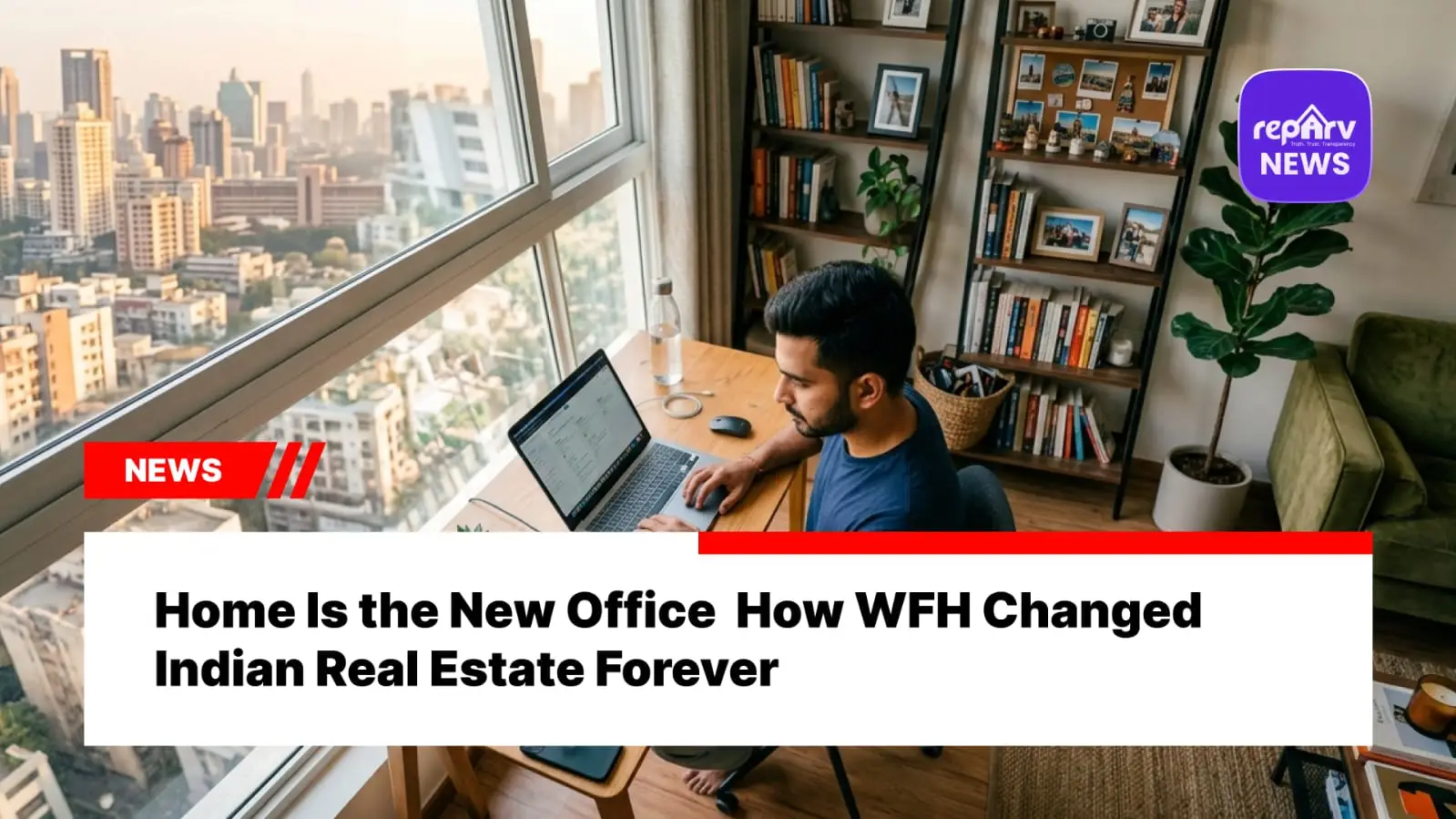
Nobody really planned for it, it happened very unexpectedly. In early 2020, millions of Indian professionals picked up their laptops, walked into their bedrooms, and started working from home fully expecting it to last a few weeks. Six years later, the ripple effects of that moment are still reshaping how Indians think about homes, cities, and what it means to have a space of their own.
Work from home did not just change how India works. It fundamentally changed what India buys, where it buys, and why.
The Home Became Something More
Before the pandemic, a home was simple. It was where you slept, cooked, and spent weekends. The office was where serious life happened. That clean separation vanished almost overnight.
Suddenly the dining table was a desk. The bedroom was a meeting room. The living room had to serve as a classroom for the kids, a yoga space in the morning, and a relaxation zone at night. Homes that were bought for a different life started feeling uncomfortably small, and people began noticing every square foot they did not have.
As a result, demand for larger homes, dedicated workspaces, and integrated lifestyle amenities surged sharply. A significant percentage of homebuyers in the NCR region, for instance, now actively prefer properties that come with dedicated work from home spaces built into the floor plan.
This was not a passing phase. It became a permanent expectation.
Builders Started Listening
Developers across the country picked up on this shift fairly quickly. The homes being designed and launched in 2025 and 2026 look noticeably different from those built five years ago. Extra rooms marketed specifically as home offices. Soundproofed study areas. High speed internet infrastructure built into the building itself. Balconies and open spaces that give professionals a mental break between calls.
Homebuyers in 2026 are increasingly prioritising lifestyle and sustainability driven housing projects demand for gated community villas, premium homes with concierge services, and spacious wellness focused living experiences has remained strong as buyers seek something their previous homes simply could not offer.
The buyer changed. And eventually the product changed with them.
Location Logic Got Turned Upside Down
For most of its history, the key question for for Indian house-hunters has been very simple how far am I from my workplace? The proximity of property to work has been the determining factor behind property values, demand for rental properties and popularity of area’s to live, more so than almost any other factor.
Working from home has completely changed this equation.Increased demand for large homes in the suburbs and outside the city for many professionals in response to hybrid working and working from home has increased the possible commuting distance significantly. Living 25 km from the city centre is now seen by many professionals as a reasonable trade-off for larger living spaces, more green areas and a much lower purchase price compared with living closer to the city centre.
This is likely one of the key reasons that Tier-2 cities are now gaining considerable attention from homebuyers. When workers only have to attend their offices two times per week, then living in cities such as Indore or Coimbatore and flying in only periodically, makes a lot of sense for many people.
The Office Market Felt It Too
Residential buildings weren't the only types of real estate affected by the downturn; businesses also faced their own changes due to many firms reevaluating their essential office space requirements. Gradually, acceptance of telecommuting and mixed-use opportunities is changing how often these firms will require Office Space. The result has two major effects on Class "A" Office space demand: one is that many firms are downsizing their floor plates or using "shared" work areas less frequently; second; and most importantly, companies are being more careful when leasing space and tending to sign shorter lease terms.
The development of large corporate campuses is slowly being replaced by smaller, smarter, and more adaptable office buildings.
Where Things Stand Today
In 2026, the work from home debate has settled into a more nuanced reality. Most large companies have moved toward hybrid models a few days in office, a few days at home. Pure remote work has become less common but has not disappeared either.
What has permanently changed, though, is the mindset of the Indian homebuyer. Space matters more than it ever did. Location is no longer everything. And a home is no longer just a place to return to at the end of the day it is a place that has to work as hard as the person living in it.
That shift, quietly triggered by a crisis nobody saw coming, has left a permanent mark on Indian real estate that no return to office policy can fully undo.



.webp)
.webp)
.webp)
.webp)

.webp)
.webp)
.webp)
.webp)













.webp)
.webp)


.webp)
.webp)
.webp)
.webp)
.webp)
.webp)
.webp)
.webp)




























.jpeg)