


.webp)
A Strong Start to the Year Despite Global Headwinds
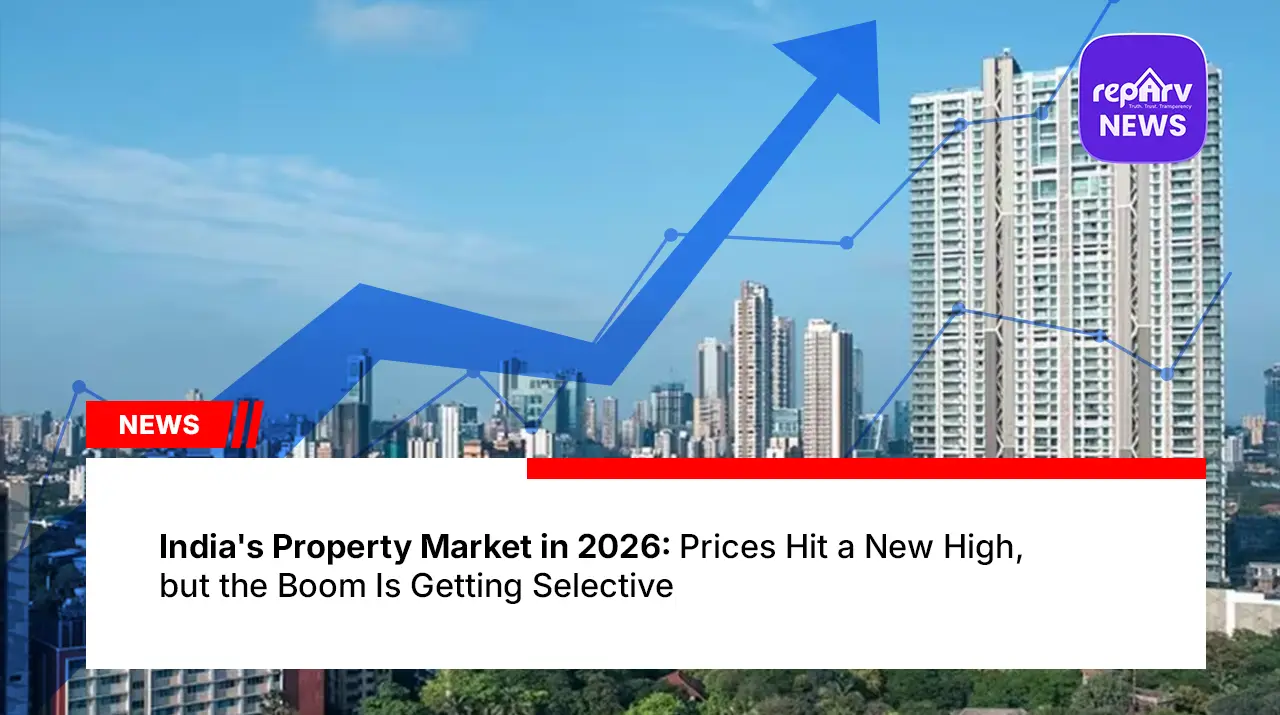
The Indian real estate sector has kicked off 2026 on a remarkably firm footing, demonstrating a resilience that defies broader global economic uncertainties. According to the latest Colliers India report, institutional investments reached a substantial $1.6 billion in the first quarter (January-March) of 2026. This represents a 25 per cent year-on-year (YoY) increase compared to the same period in 2025. While there was a sequential dip from the record-breaking fourth quarter of the previous year—largely due to a high base effect—the Q1 2026 volumes remained a staggering 64 per cent higher than the average first-quarter performance seen since 2020. This trend underscores a maturing market that is increasingly capable of generating its own momentum.
The Rise of the Domestic Institutional Investor
The most defining characteristic of this quarter’s performance is the unprecedented dominance of domestic capital. Historically, Indian real estate relied heavily on foreign private equity and sovereign wealth funds, with domestic players typically accounting for 20-50 per cent of the total pie. However, in Q1 2026, domestic investors contributed a massive $1.2 billion, driving three-fourths of all institutional investments. This 57 per cent annual surge in local funding reflects a deep-rooted confidence among Indian Alternate Investment Funds (AIFs), insurance companies, and family offices in the country's long-term growth story. As global investors adopt a more "wait-and-watch" stance, the "India-for-India" investment thesis has transitioned from a concept to a market-leading reality.
Office Assets Maintain the Lion's Share of Capital
In terms of sectoral allocation, commercial office assets continue to be the primary magnet for institutional capital. This segment accounted for half of the total quarterly inflows, securing approximately $0.8 billion. Notably, investment in the office sector was nearly twice the levels recorded in Q1 2025. The demand is being fueled by the continued expansion of Global Capability Centres (GCCs) and a robust return-to-office trend across major metros. Domestic investors were particularly active here, driving over 90 per cent of the office-specific inflows. This focus on operational, yield-generating assets highlights a strategic shift toward stability and long-term rental income in the Indian property market.
Residential and Alternative Segments See Diversified Interest
Following the office sector, the residential segment attracted $0.3 billion, representing 20 per cent of the quarterly volume. While this reflects a steady demand for premium housing, the real story lies in the "alternatives." Segments like hospitality, data centers, and retail collectively accounted for over 20 per cent of the total investment volumes. Interestingly, while foreign investment moderated in traditional sectors, it accounted for a significant 70 per cent share in these alternative asset classes. This suggests that international funds are pivoting toward high-growth, niche opportunities with superior risk-return profiles, such as luxury hotels and tech-enabled industrial spaces.
Regional Performance: Delhi-NCR and Bengaluru Lead the Way
From a geographical perspective, the investment activity remained concentrated in India's primary real estate hubs. Delhi-NCR and Bengaluru emerged as the dual engines of growth, collectively accounting for 46 per cent of the total quarterly inflows. Delhi-NCR led the individual city rankings with an investment volume of $0.4 billion, followed closely by Bengaluru at $0.3 billion. These markets were primarily driven by large-scale transactions in operational office assets. Additionally, multi-city deals reached nearly $0.5 billion, as investors increasingly looked for diversified portfolios that span across Tier-I and emerging Tier-II locations to mitigate regional risks.
A Transient Phase of Global Caution
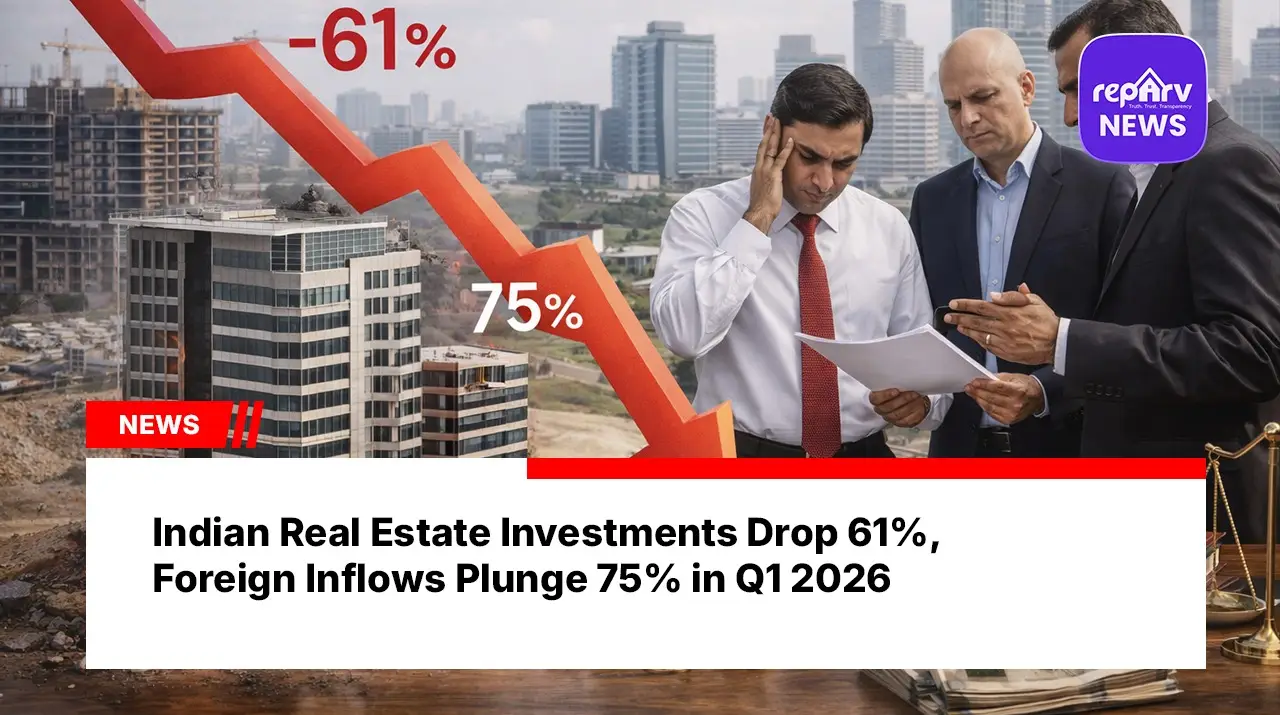
The moderation of foreign investment to $0.4 billion—a 23 per cent annual decline—is being viewed by experts as a temporary reaction to global triggers. Geopolitical tensions in West Asia and volatilities in the trade and commodities markets have led international players to recalibrate their deployment timelines. However, Badal Yagnik, CEO of Colliers India, notes that India's favorable demographics and consumption-driven economy are likely to keep its unique positioning in the Asia-Pacific region intact. As the global macro environment stabilizes, the expectation is that foreign capital will return to participate in India’s structural real estate transformation.
Conclusion: A Maturing Investment Ecosystem
The Q1 2026 data paints a picture of an Indian real estate ecosystem that is becoming increasingly self-reliant. The 25 per cent jump in institutional inflows, spearheaded by local capital, serves as a vital cushion against global shocks. For developers and stakeholders at Reparv, this shift signals a more stable and predictable funding environment. As the market continues to professionalize through REITs and enhanced regulatory transparency, the focus is shifting toward quality and sustainability. While the coming quarters may see continued global caution, the sheer volume of domestic participation ensures that the growth trajectory of the Indian property sector remains firmly upward.






.webp)

.webp)
.webp)


.webp)


.webp)
.webp)
.webp)
.webp)



















.webp)
.webp)


.webp)

.webp)
.webp)
.webp)
.webp)
.webp)
.webp)
































.jpeg)