

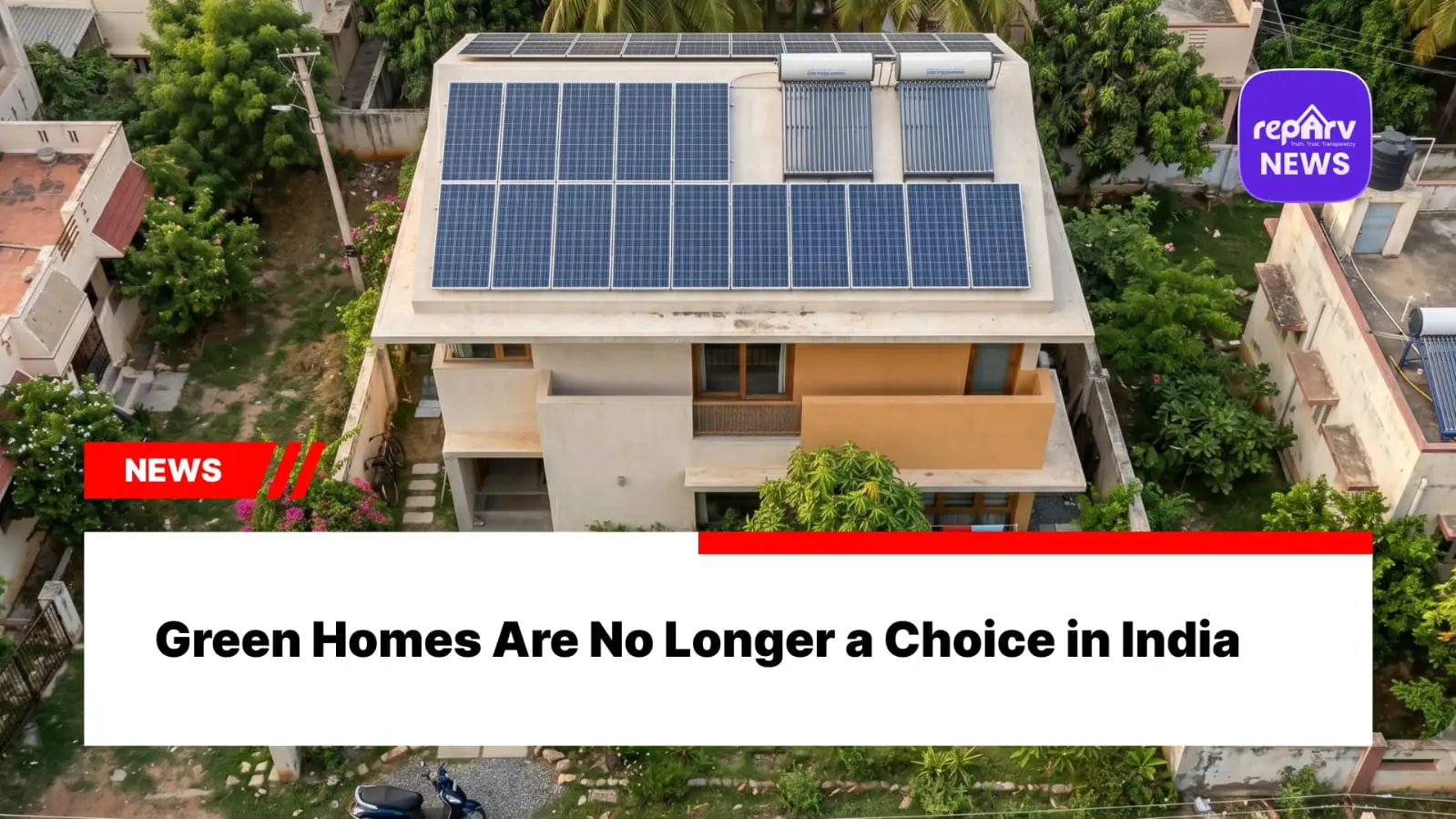
If you Walk into any new residential project in Bengaluru, Pune, or Hyderabad today and something will feel different. The brochures look different, The questions buyers are asking sound different, And the features developers are leading with have changed completely.
Solar panels, Rainwater harvesting, EV charging points, Zero waste systems,Net zero energy designs. Five years ago these were selling points for a very few specific kind of buyers for someone who cared deeply about the environment and was willing to pay extra for it. But Today they are fast becoming the baseline expectation of the average Indian homebuyer. And this single shift is quietly transforming Indian real estate in 2026 from the Ground level.
It Started With the Electricity Bill
Let us be honest about something. Most Indians did not fall in love with green homes India because of environmental guilt. They fell in love with it because of their electricity bill.
Energy efficient designs including insulated walls, double glazed windows, and solar enabled homes that reduce electricity and water consumption by 30 to 50 percent. For a household spending Rs 10,000 every month on electricity in a city like Chennai or Delhi, that saving is not a small lifestyle perk. It is a serious financial decision that compounds year after year.
Once buyers understood that energy efficient homes India meant genuinely lower monthly costs and not just a feel good label the entire conversation shifted. Sustainable housing India stopped being about values and started being about value. That is when it became truly mainstream and conventional.
Your Green Home Is Also Worth More
Here is something that surprises many first time buyers. A green certified home India does not just cost less to live in it is also worth more when you decide to sell.
In 2026 sustainable homes resale value is consistently stronger than conventional housing because buyers factor in lower running costs, future regulation readiness, and long term comfort. Energy efficient homes resell faster and face fewer price negotiations especially in urban Indian markets.
This has turned eco friendly homes investment from a lifestyle preference into a genuinely smart financial strategy and a long term investment.Developers who understood this early are the ones seeing the strongest sales numbers today.Buyers who understood it are sitting on assets that are appreciating faster than comparable conventional homes nearby and make more profit out of it.The green premium real estate India effect is real, measurable, and growing every quarter.
Developers Are Finally Walking the Talk
For years the gap between what developers promised on sustainability and what they actually delivered was wide enough to give frustration. A rooftop garden and a recycled water tank was enough to claim a green label. Buyers grew skeptical and starting asking questions.But Today in 2026 is different. The projects coming to market now are genuinely rethinking what sustainable real estate India means at a construction level. Developers like Mahindra Eden have built one of India's first net zero residential projects in Bengaluru featuring 100 percent renewable energy, water recycling technology, and EV charging ports integrated throughout the project.
Developers are now integrating energy efficient materials, water conservation systems, waste management solutions, native landscaping, and rainwater harvesting into their projects making sustainability a core part of the building rather than an afterthought. Net zero homes India are no longer a concept in a PowerPoint presentation only. They are being built, sold, and lived in right now.
What Buyers Are Actually Looking For
If you spend any time talking to homebuyers in India's major cities today, a very clear picture emerges of what green building features India actually matter versus what sounds good on paper.
The features that genuinely move buying decisions in 2026 are solar power for common areas and individual units, rainwater harvesting systems, EV charging infrastructure India homes , natural ventilation design that reduces dependence on air conditioning, smart energy management systems that track and optimise consumption in real time, low maintenance landscaping using native plants, and waste segregation and composting systems built into the project.
Homebuyers in 2026 are increasingly prioritising lifestyle and sustainability driven housing projects with demand for green homes using smart technologies and energy efficient materials rising steadily driven by government incentives and growing consumer awareness. The buyer asking these questions is no longer an outlier. They are increasingly the norm.
The Office Market Is Already There
While residential sustainable homes India 2026 is accelerating, the commercial real estate sector has actually been leading this charge for longer.80 to 90 percent of new office supply in 2026 will be green certified as developers and investors work to avoid the risk of stranded assets that cannot attract quality tenants in an increasingly sustainability conscious corporate environment.
The green premium is becoming more pronounced in 2026 with investors who do not upgrade their existing portfolios toward greener standards facing lower occupancy rates and diminishing long term returns.Green certified buildings India are no longer a niche segment of the commercial market. They are rapidly becoming the only segment serious tenants and investors want to be in.
The Numbers Tell the Full Story
Beyond individual projects and buyer conversations, the macro picture for green building market India is striking.India's green building market is projected to grow at a compound annual growth rate of 8.3 percent between 2024 and 2029 driven by government initiatives and increasingly stricter building regulations.
Eco friendly real estate India is not growing at the margins. It is growing at the centre of where the market is heading. And with climate becoming an increasingly urgent reality in Indian cities hotter summers, water shortages, rising energy costs the financial case for climate resilient homes India is only going to get stronger with every passing year.
Why This Generation Is Leading the Change
The last important aspect of this story is not about the numbers themselves, rather what they represent are about how millennials and Generation Z professionals who are buying property for the first time today in India, have a greater knowledge (and therefore awareness) of climate change than any previous generation.
As inflation increases the price of both energy and water, homebuyers are becoming more discerning when making their purchasing decision; they view new homes built using sustainable methods as not only a sound financial investment in good times, but as providing value through lower cost of ownership, reduced usage of natural resources and greater daily comfort, than older conventional homes.
Therefore, buyers of sustainable homes in India during the year 2026 aren't doing so for the purpose of making a statement; they are making the choice based on research completed, numbers crunched, and an understanding of the potential benefits over the next couple of decades.
Where the smartest financial decision coincides with the most environmentally responsible decision and they do overlap significantly there is movement in the marketplace. The real estate market in India is already experiencing this type of movement as of 2026. This generation is going forward with green homes in India



.webp)
.webp)
.webp)
.webp)
.webp)
.webp)
.webp)
.webp)








.webp)
.webp)

.webp)
.webp)
.webp)
.webp)
.webp)
.webp)
.webp)
.webp)


















.jpeg)