


Analyzing the Sequential Decline in Property Inflows
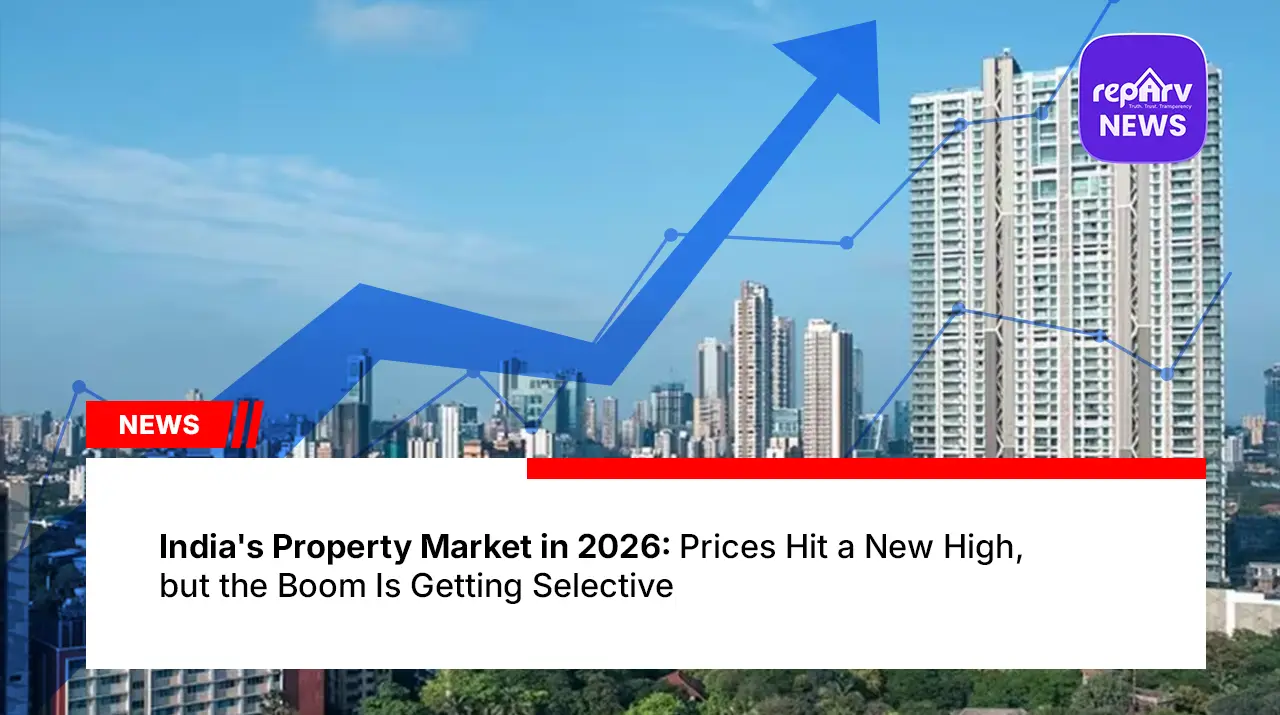
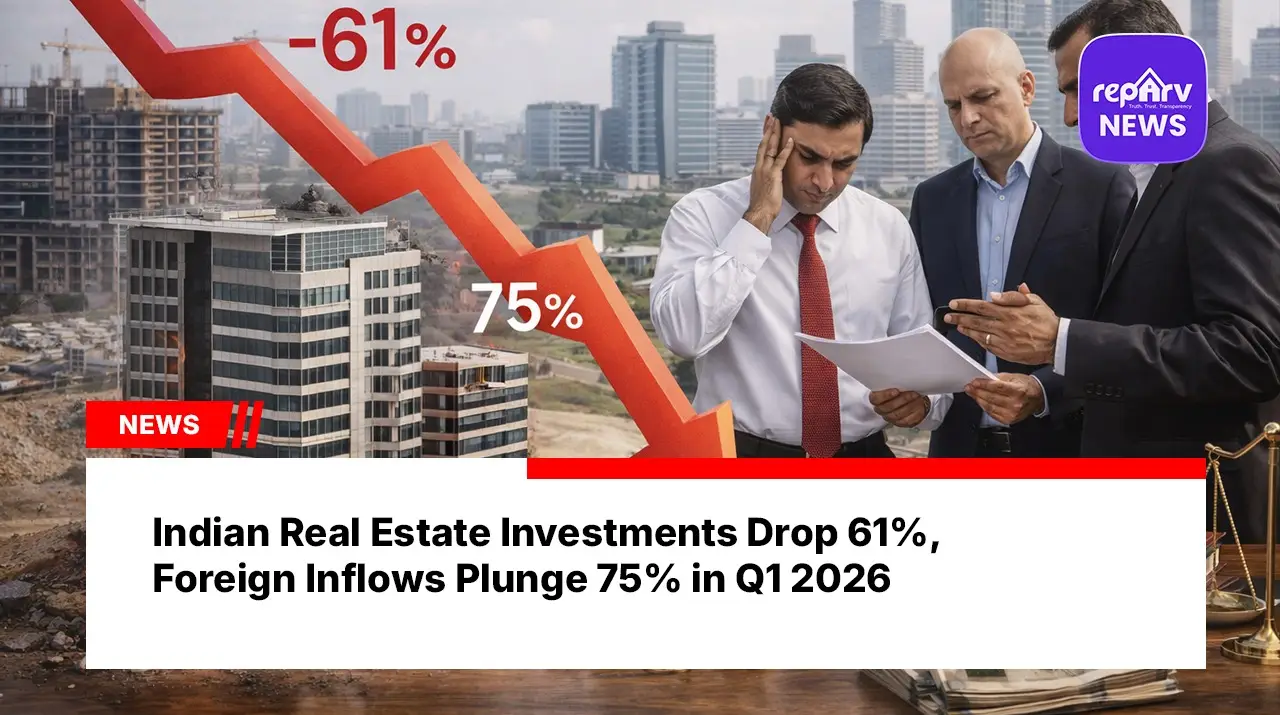
The Indian real estate market, in terms of investment, is going through an extremely challenging phase characterised by a sharp sequential decline, while annual figures indicate underlying resilience. According to the latest data released by global consulting firms, inflows into the Indian real estate market have reduced by 62 percent in the first quarter of 2026 compared to the last quarter of 2025. The sharp fall in investment activity was accompanied by a decrease in the total investment value, which stood at $1.41 billion dollars, compared to the $3.73 billion recorded in the previous quarter. While the numbers suggest a potential crisis, analysis of the underlying causes reveals that the market is not declining but is responding to challenges arising from geopolitical tensions and the global financial conditions.
Geopolitical Factors Impacting Foreign Capital Sentiment
The major factor responsible for the cautious attitude is the rising tensions in West Asia. Geopolitical risks typically lead to a flight to safety by international investors, prompting a "wait and watch" approach in the present scenario. This negative sentiment has resulted in a temporary bottleneck in foreign direct investment, which has always been a key contributor to high-end Indian developments. However, there is also a positive side: compared to the first quarter of 2025, when the FDI stood at a just $0.81 billion, the current scenario shows a robust 74 percent growth year-on-year. This, therefore, implies that even though the market has slowed down from its peak activity during last year, it has still managed to be much stronger than what it was a year ago.
Dominance of Commercial Real Estate and Office Space Demand
Regarding which segment has attracted capital, commercial real estate once again dominated the market. In the first quarter, commercial properties, including Grade-A office spaces, retail, co-working, and hospitality, dominated 80 percent of all investments made during this period. Despite total commercial investment falling to $1.12 billion from $2.28 billion in the previous quarter, the sector experienced an increase threefold compared to the same time last year. The main driving force behind the consistent investment in the sector is the growth rate experienced by the Global Capability Centres (GCCs). The continued perception by multinational corporations that the country is an important location for high-end talent and operational efficiency is the main reason why the need for professional workspace continues to drive the entire real estate market.
Residential Sector Vulnerability and Shifting Investor Priorities
It is interesting to note that the residential sector is having a tougher time compared to the commercial sector. Data shows that investment in the residential sector declined by 53 percent over the previous quarter and 59 percent over the previous year, reaching $205.9 million. This dichotomy between commercial and residential markets underscores a shift in institutional investment focus. While home purchases at an individual level continue to be an ongoing phenomenon in Indian metros, institutional investors appear to be increasingly favoring the stability offered by commercial and industrial markets. The focus on domestic retail sentiment in the residential market makes it a different challenge for institutional investors, who currently perceive more stability in the infrastructure supporting India’s burgeoning services export markets.
The Rise of Domestic Capital as a Market Stabilizer
One of the more heartening aspects of this particular quarter is the emergence of domestic capital as a market stabilizer. While foreign investment remains subdued due to global macroeconomic conditions, Indian institutional investors and high-net-worth individuals have emerged as a counterweight. Domestic capital provides essential protection, ensuring that market activity will continue despite external market fluctuations. According to industry experts, the market shows healthy development through its increasing demand for domestic capital. It also shows that local players are highly confident about the structural changes that are happening in the Indian property sector, such as increased transparency and formalisation of the sector through regulations such as RERA.
Future Outlook for the Indian Property Market in 2026
The outlook for the rest of 2026 is cautiously optimistic. The commercial sector, especially driven by GCC demand, has shown significant resilience, providing a strong base for recovery. The flow of foreign capital into the country faces uncertainty due to geopolitical risks in West Asia, but the demand for infrastructure and professional workspace remains constant. The sector is effectively consolidating, and investors are becoming increasingly selective and choosing high-quality, sustainable properties that can sustain through economic cycles.
Conclusion: Market Resilience Amid External Volatility
The message to all concerned parties in the Indian real estate market is quite clear: what’s currently affecting the level of investment in Indian real estate is more a result of external global concerns than a reflection upon the internal market’s viability. The impressive year-on-year growth demonstrates that the level of investment in Indian real estate far exceeds that of previous cycles. As long as there remains a demand for commercial infrastructure in keeping with India’s position in the global marketplace as a technology and service leader, there will be no issue with renewed investment once the global political climate stabilizes. Until then, there will be a healthy blend of domestic resilience and targeted investments in the most productive sectors of the Indian economy.






.webp)
.webp)
.webp)

.webp)


.webp)
.webp)
.webp)
.webp)














.webp)
.webp)


.webp)

.webp)
.webp)
.webp)
.webp)
.webp)
.webp)
.webp)


























.jpeg)