

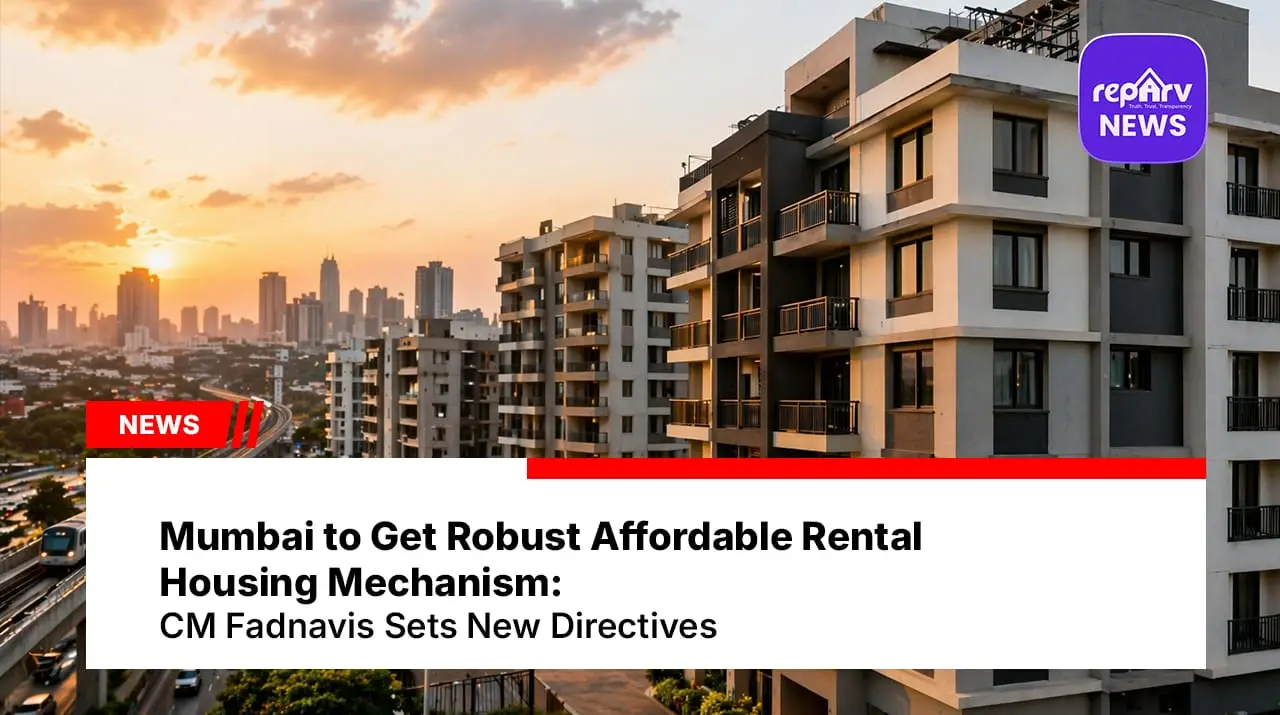
In a significant move to alleviate the mounting housing pressure in India’s financial capital, Maharashtra Chief Minister Devendra Fadnavis has issued firm directives to establish a robust system for affordable rental housing in Mumbai. Recognizing that the city remains a primary magnet for migrants seeking job opportunities and business growth, the government aims to bridge the widening gap between the soaring demand for living spaces and the limited supply of accessible homes. During a high-level review meeting held at the Sahyadri Guest House, the Chief Minister emphasized that a transparent, demand-driven framework is essential to ensure that both landlords and tenants can navigate the rental market without unnecessary friction or legal exploitation.
Empowering Governance Through Digital Innovation and New Authorities
Central to the Chief Minister's vision is the development of a dedicated online portal designed to streamline the search and rental process for citizens. By digitizing the rental landscape, the state government intends to reduce reliance on informal middlemen and provide a secure, verified platform for housing transactions. Furthermore, to bring administrative efficiency to the enforcement of the Maharashtra Rent Control Act, 1999, the Chief Minister has directed the appointment of Deputy Commissioners of Police (DCPs) to act as competent authorities. This strategic move is intended to decentralize the grievance redressal mechanism; as police jurisdictions expand to meet the needs of a growing population, the number of designated competent authorities will automatically scale, ensuring that legal oversight keeps pace with urban expansion.
Judicial Reforms to Clear the Backlog of Rental Disputes
One of the most ambitious aspects of this directive involves a massive overhaul of how rental-related legal cases are handled. Acknowledging that long-pending disputes have long plagued the rental sector, Fadnavis has proposed the establishment of 100 special courts dedicated exclusively to resolving rent-related matters. To staff these courts, the government plans to leverage the expertise of retired judges, ensuring that cases are processed with speed and professional oversight. In an effort to maximize efficiency, the state is also exploring the introduction of "evening courts," subject to necessary judicial permissions. If suitable government premises are unavailable for these new courts, the administration is prepared to lease space to ensure that these judicial interventions begin without delay, providing much-needed relief to thousands of litigants currently stuck in the legal system.
Expanding the Affordable Housing Footprint in Mumbai
Complementing the administrative and legal reforms, the government is also making tangible progress on the supply side of the housing equation. In the same high-level meeting, the Chief Minister approved the acquisition of approximately 28.84 acres of land owned by Bharat Sanchar Nigam Limited (BSNL) and Mahanagar Telephone Nigam Limited (MTNL) in Borivali. With an investment of Rs 729 crore, this land will be repurposed to build affordable housing units under the Pradhan Mantri Awas Yojana (PMAY). This initiative is projected to deliver over 1,000 homes, directly addressing the housing shortage for lower-income groups and economically weaker sections. By unlocking underutilized public sector land, the government is signaling a commitment to sustainable urban development, aiming to ensure that the city’s expansion remains inclusive and viable for its diverse workforce.






.webp)
.webp)
.webp)
.webp)


.webp)
.webp)
.webp)
.webp)








.webp)
.webp)


.webp)
.webp)
.webp)
.webp)
.webp)
.webp)
.webp)
.webp)





























.jpeg)