

Defining the Statutory Limits of RERA Jurisdiction
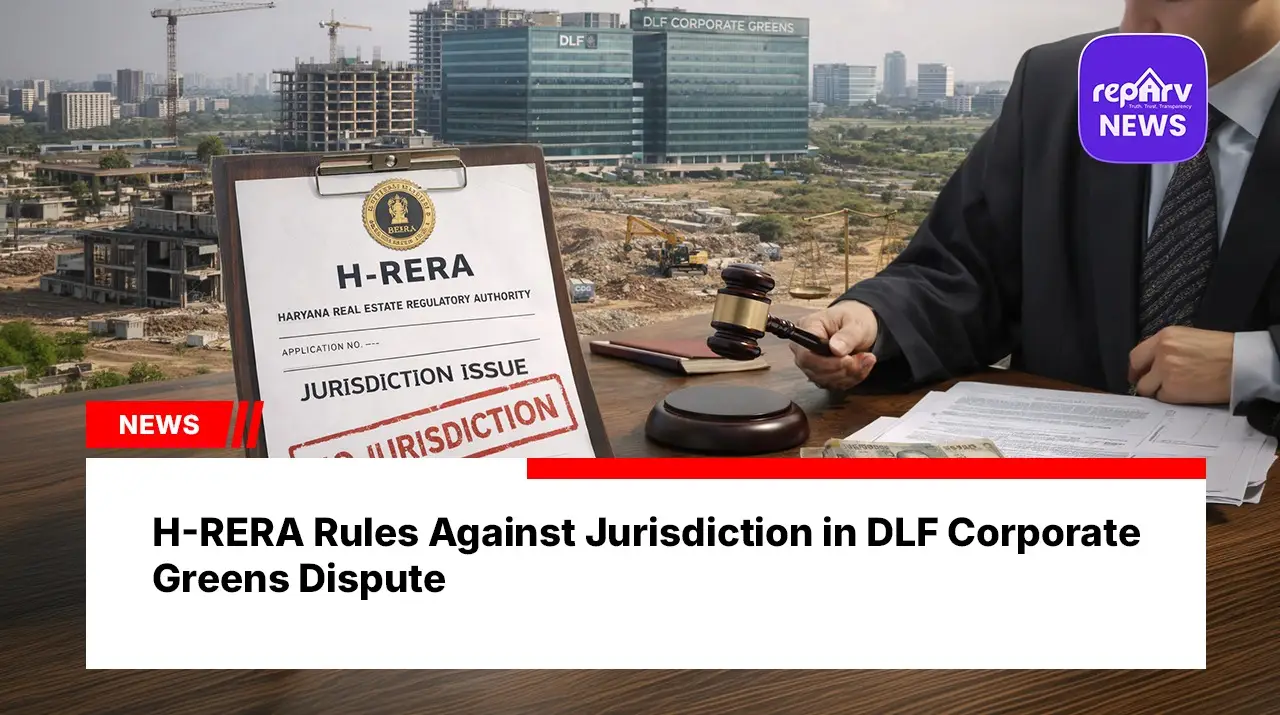
In yet another important judgment by the Haryana Real Estate Regulatory Authority (H-RERA), a long-pending grievance filed by the complainants against DLF Corporate Greens has been rejected. This judgment, handed down in March 2026, essentially focuses on the definition of an “ongoing project” under the Real Estate (Regulation and Development) Act, 2016. According to this judgment, the scope of RERA is only applicable to those projects which have been completed after notification of the provisions under RERA in 2017. By refusing to consider the grievance, the authority has made it quite clear that RERA is a statute that cannot be considered to be a tool for settling any old property disputes.
The Role of the Occupation Certificate in Legal Finality
The key point in dismissing the grievance was the timing of completion of the project. It is pertinent to note here that evidence presented to the authority indicated that the DLF Corporate Greens in Sector 74A, Gurugram had been given the Occupation Certificate (OC) on June 19, 2014. As the certificate has been obtained almost three years prior to the enforcement of the Haryana RERA Rules in 2017, the project is not covered under the definition of "Ongoing Project" for which the registration has become obligatory. Therefore, for the benefit of the purchasers, they are deprived of the special protections accorded under the RERA Act for such a project.
Unpacking the Buyer Allegations and Financial Claims
The dispute between the complainants and the developer has emerged as a result of the booking of the commercial unit in 2010. According to the complainants, who booked approximately 1,600 sq. ft. of area for ₹92 lakhs, they have made payments exceeding ₹1 crore to the developer. The grounds for complaint raised by the complainants include delays in possession along with other issues. They were also asking for an immediate issuance of a conveyance deed. In this case, since the project falls out of the jurisdiction of the regulatory body, such merits could not be considered. This is a decision that had nothing to do with merit but rather with the purely technical reasons and, thus, the complainants will have to take up other channels of addressing their concerns.
Reinforcing the Principle of Legal Certainty
The current case can be regarded as another step undertaken by the H-RERA Gurugram to emphasize the importance of legal certainty as one of its main principles. By staying within the limits of its own jurisdiction, H-RERA prevents the "reopening" of any matters that have already been resolved or which had already been concluded during a time when there was no such thing as contemporary real estate regulations. From a real estate developer's perspective, this is a very important factor that helps prevent endless lawsuits regarding projects completed during another legal period.
Alternative Remedies for Pre-RERA Property Disputes
Despite the inability of RERA to help with cases such as those concerning DLF Corporate Greens, there are other alternative ways in which the investors in such developments can seek justice. In its judgment, it was clearly stated by the authority that the cases that deal with possession interest issues, calculation of areas and charges for maintenance should be sorted out through "appropriate forums". In most cases, such forums refer to either the Civil Courts or even the Consumer Protection Act procedures. Such processes, although less speedy compared to the RERA one, are the right legal platforms for properties that existed prior to the main law on the Indian real estate.
Conclusion: A Balanced Regulatory Approach in Gurugram
In the case of rejection of the complaint regarding DLF Corporate Greens, it is clear that the Haryana Real Estate Regulatory Authority operates from a balanced perspective on the issues of regulations within the property sector in India. As the real estate scenario in Gurugram evolves, these judgments play a critical role in helping set down the "rules of engagement" between both the developer and consumer. In order for the market to be a healthy and open one, both entities have to know where the line of authority starts and stops.






.webp)
.webp)
.webp)


.webp)



.webp)
.webp)
.webp)
.webp)










.webp)
.webp)


.webp)

.webp)
.webp)
.webp)
.webp)
.webp)
.webp)
.webp)




























.jpeg)