

Flats were supposed to be the future. Towers were going up everywhere. Builders were launching project after project. And for a long time, it made sense buy a flat, get a loan, move in, done. The apartment was practical. The apartment was modern. The apartment was, everyone agreed, what urban India was supposed to look like.
But something quietly changed. And nobody really announced it.
Walk into any serious real estate conversation today in a broker's office, at a family dinner, among colleagues discussing where to invest and you will hear the same word coming up again and again. Plot. Not flat, Not apartment, Plot. A piece of land. Something old, something simple, something that a generation of urban buyers had almost entirely stopped considering.
There is something deeply personal about owning a piece of land in India. It is not just a financial decision. For most families, it is almost emotional the idea that somewhere out there, there is a piece of earth that belongs entirely to you. No shared walls. No society rules. No neighbour whose music you can hear through the ceiling at eleven at night.
For a while, that feeling took a backseat. Apartments became the practical choice ,ready to move, easy to finance, located inside cities where jobs were. Plots were seen as complicated, risky, meant for investors with deep pockets and patience. But something has shifted in the last two years. And the numbers are now impossible to ignore.
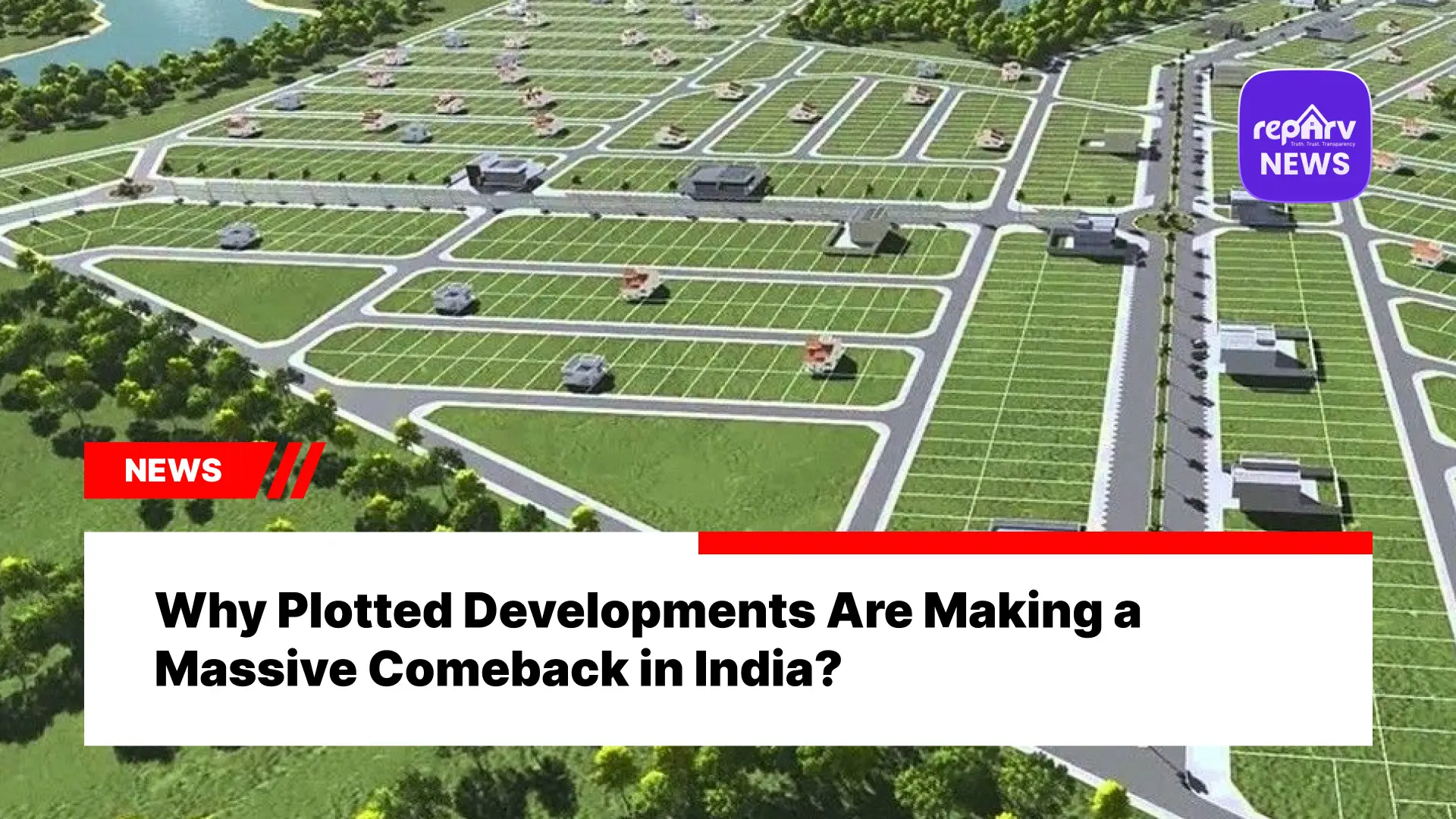
Plotted developments are back not as a niche option, but as one of the fastest growing segments in Indian real estate right now.
What the Data Is Actually Saying
The market isn't just moving, it's moving in a very precise manner. According to JLL India, over the last two years the amount of land owned by or occupied by residential transactions has steadily increased along with a corresponding drop in the amount of low-density development. Additionally, data from ANAROCK verifies that the majority of new land being purchased by large developers is now being designated for polite developments and villa-based properties.
In FY24, there were 2,252 acres of land transactions defined for plotted and residential developments; this represents a dramatic and meaningful change toward suburban and peripheral urban markets across the country.
These numbers are very large; what they represent is that when developers (who are always following where the money is) are changing their purchasing strategy to include plots of land, it is very apparent to you where the buying demand is moving.
Why Indians Are Choosing Land Over Flats
The reasons are practical, emotional, and financial all at once. Complete ownership and freedom is one of the biggest advantages of plotted developments is complete ownership. When you buy a plot in India, the land belongs entirely to you. Unlike apartments, there are no shared walls, common areas, or society rules limiting structural changes. You decide the layout, You decide when to build, You decide what your home looks like from the ground up, and literally everything about the house screams you and your preferences.
No maintenance charges eating into your budget this is one that apartment owners feel every single month. While buying an apartment in a project, the buyer is introduced to a corpus fund for property upkeep or a bill post possession. The resident is charged for the maintenance of common spaces whether they use them or not charges that form a substantial share of monthly expenses and often feel irrelevant if all amenities are not used. A plot has none of that until you choose to build.
Build when you are ready not when the builder says so. One major advantage of plotted developments is timing flexibility. You can buy now and build later based on your goals, budget, or life stage making it suitable for future homes, second homes, retirement planning, or long-term wealth creation. For a young family that wants to own land today but cannot afford full construction costs right now, this flexibility is genuinely life-changing.
The Post-Pandemic Mindset Shift
There are some changes that have occurred after the Covid pandemic that have not changed back entirely. A recent CBRE survey shows that 62% of urban Indians now want bigger homes, and half of them would even like to live in a low- density area. Being cooped up inside small apartments for so long, people have recognized the importance of having enough space, and having some privacy. Being able to step outside your front door and have your own outdoor area is a huge deal for many people. What once seemed like a change solely based on affordability is now an evolution of how people behave; the options to delay construction/build in phases and utilize an evolving vision of their income has started out weighing the convenience that is perceived for current housing.
This is the silent revolution; people are not purchasing plots because they can no longer afford flats, but instead because a plot gives them a lifestyle that a flat could never give them.
Where Is This Boom Happening?
Plotted developments are rapidly gaining traction across India, particularly in Tier-2 and Tier-3 cities, where entry prices are lower, infrastructure is improving, and employment opportunities are rising steadily.
South Indian cities are leading this charge. Bengaluru's share of plotted development sales increased from 23% to 25%, while Chennai saw a dramatic jump from 4% to 80% of total units sold in certain periods. Combined, south Indian cities accounted for an 82% share in sales attributable to plots and villa projects. But it is not just the south. Cities along major infrastructure corridors expressways, metro lines, industrial zones are seeing land values climb steadily as connectivity brings previously remote areas within practical commuting distance of employment hubs.
Land Does Not Depreciate And That Matters
Many investors consider land investment in India to be generally safer than investments in buildings because unlike buildings, such as apartments or houses, land appreciates faster than buildings, (that is, it tends to go up in value), making it an attractive, long-term real estate investment opportunity.
Based on recent data from National Housing Bank, land price growth has outperformed multi-unit building growth (apartments) in major cities ("Tier 1") by a margin of about 15% to 20% over the last few years. This is because building value depreciates over time, and maintenance costs on a building generally increase over time, while land simply exists and increases in value as a country grows. As demand rises for land and supply stays relatively constant due to limited supply of land in our country with a growing population, land becomes more valuable year after year.
One Thing to Always Check
The enthusiasm around plots is tangible, but it is also crucial to do due diligence .Always check that the land you are considering for a purchase has a clear title, as well as no outstanding legal issues (i.e., lawsuits). You should also look for properties that have been registered with RERA for improved transparency and security. When possible, purchase plots located near major highways, metro lines and proposed infrastructure sites; And, as always, ensure that there are adequate roads, electricity, drainage and potable water available to the property.
If you can find and purchase a well-located (no legal issues), RERA-registered (for transparency) plot located in an area with good growth potential, it will likely be one of the best investments that can be made by an Indian family today. Just make sure you're buying the right one.



.webp)
.webp)
.webp)
.webp)

.webp)
.webp)
.webp)
.webp)














.webp)
.webp)


.webp)
.webp)
.webp)
.webp)
.webp)
.webp)
.webp)
.webp)























.jpeg)