

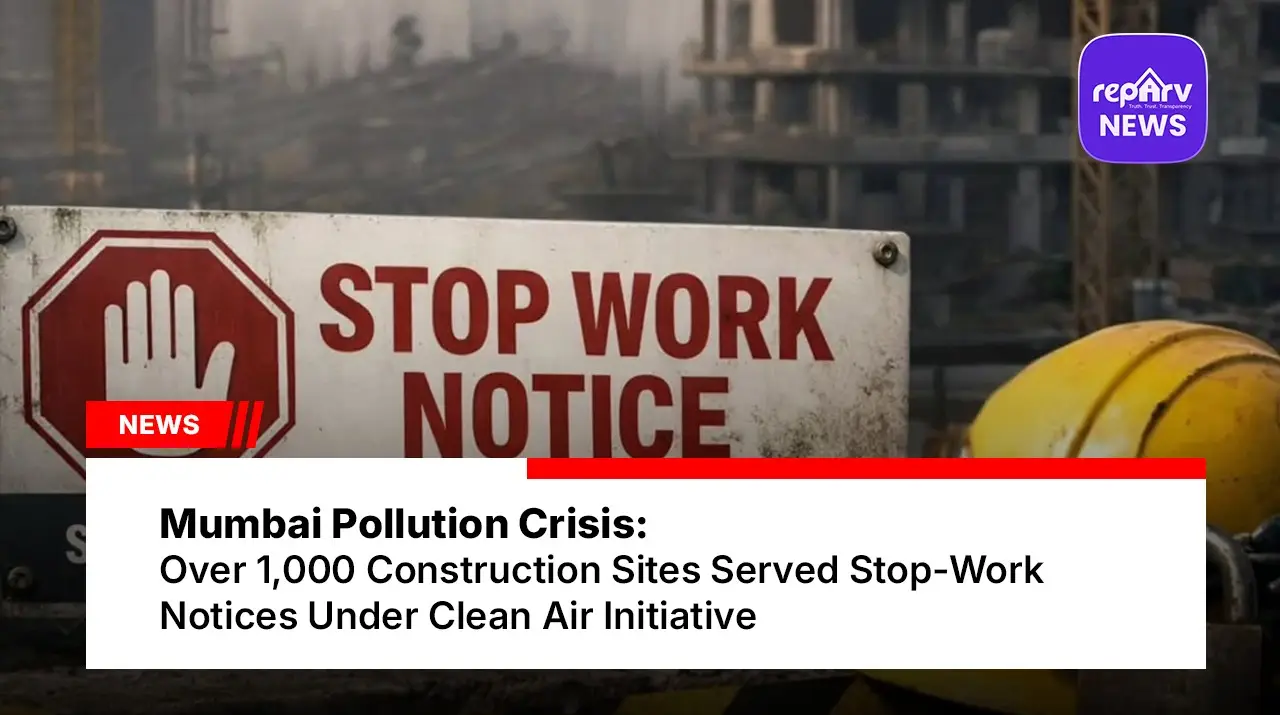
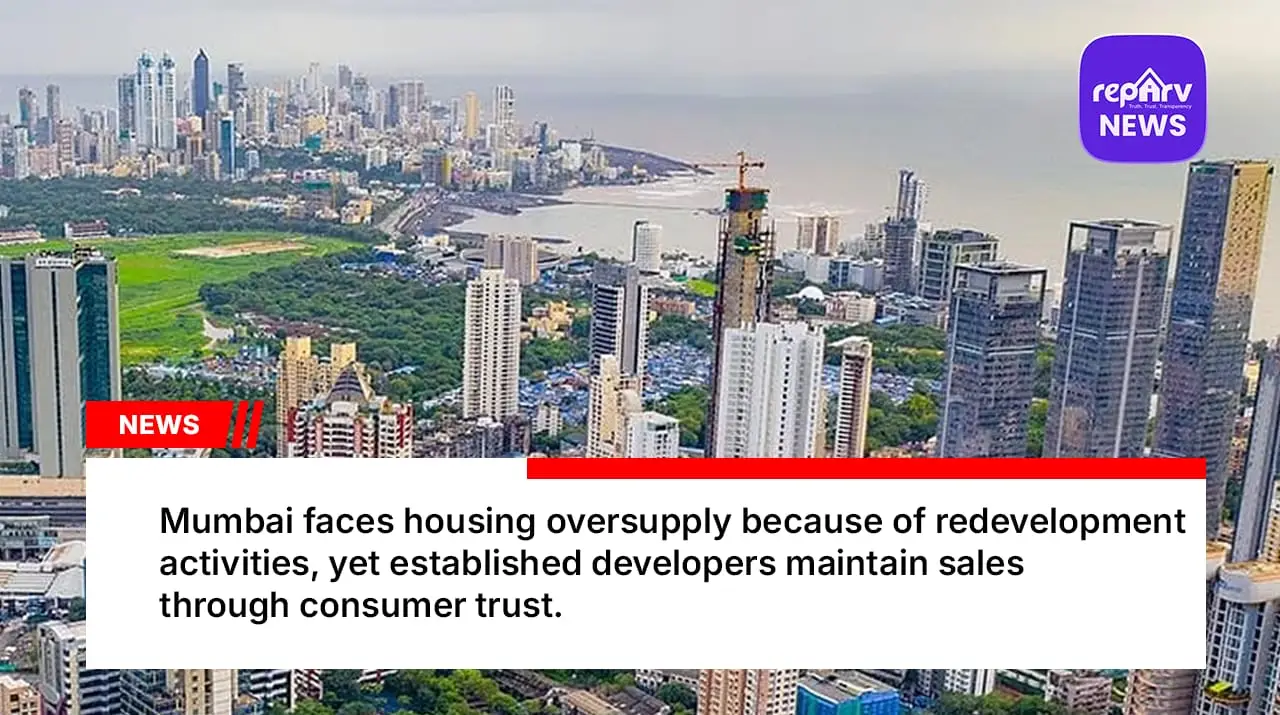
The Mumbai cityscape, also known for its towering cranes and bare high-rises, has remained unusually quiet across hundreds of construction sectors in the past few days. In a dramatic administrative move, the Maharashtra government and the Brihanmumbai Municipal Corporation (BMC) have now confirmed that more than 1,000 construction sites in Mumbai have been served stop-work notices as part of a high-stakes effort to combat the worsening air pollution in the financial capital. This bold move is a key part of the state’s ambitious Clean Air initiative, which seeks to combat the "dust menace" that has long plagued Mumbai during its dry winters because of its unprecedented urbanisation and massive construction projects.
This was announced by the Environment Minister of Maharashtra State, Pankaja Munde, during the recent session of the state’s Legislative Assembly. During the Assembly sessions, the state’s stance on implementing stricter environmental norms on new constructions has come into the spotlight. This is indeed a major milestone for the Mumbai real estate industry, which has always come under fire for its contribution to particulate matter pollution. Official data shows that authorities have not only warned violators but have also taken strict action against nearly 88% of all the active construction projects in the city for various environmental offences. This is indeed a drastic change in the matter.
Mandatory Air Quality Sensors and Enforcement Escalation
The major reason for the halt in a large number of industrial projects has been the blatant disregard for the mandatory implementation of air quality monitoring sensors. Out of 2,224 active projects within the city limits, a staggering 678 were ordered to shut down on a single day in January for failing to implement low-cost air quality sensors, which are now mandatory for all construction projects. These sensors have been implemented with the purpose of providing real-time data to the Maharashtra Pollution Control Board (MPCB) and ward offices.
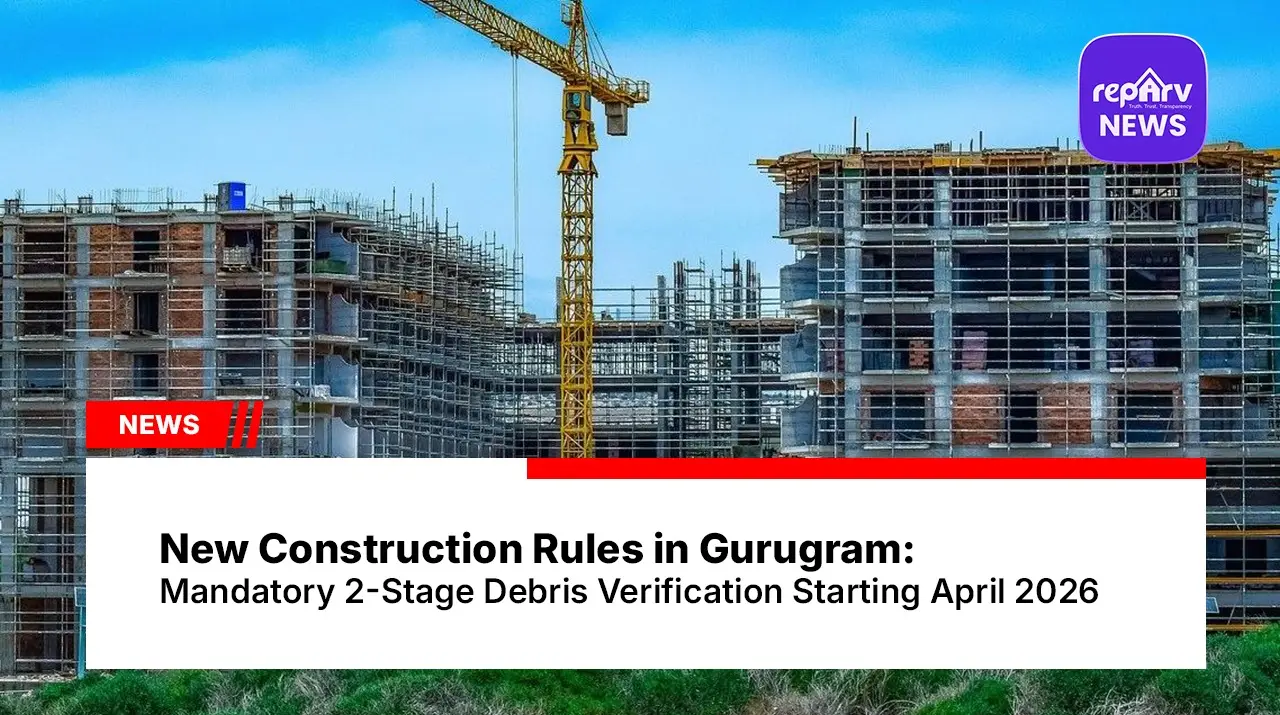
Under the very stringent guidelines laid down by the BMC 28-point guidelines, it has now become a requirement for developers to transform their construction sites into "closed environments." This has included the installation of 35-foot-high metal fences around the entire perimeter of construction projects, as well as the use of green cloth or jute sheets to completely enclose buildings that are under construction. However, inspections conducted by 25 ward-level flying squads have revealed that hundreds of construction sites were operating without these basic safety measures in place, and hence, a cloud of particulate matter has been drifting into densely populated residential areas, causing a major public health concern.
Holistic Dust Mitigation Strategy
The measures have not only targeted construction sites alone. The government has taken a very holistic approach to the Mumbai dust mitigation strategy, realising that the transportation of building materials is just as dangerous as the construction process itself. Over 1,981 show-cause notices have been issued to contractors for failing to implement mandatory vehicle tyre washing at exit points, as well as failing to cover carry debris trucks with tarpaulin.
In an effort to remove the existing impurities, the BMC has deployed 126 water tankers and 25 misting machines for "scrubbing" the city roads, which span over 14,400 kilometres, to reduce the resuspension of road dust, which contributes to PM10 and PM2.5 counts.
Public Health and Future Outlook
Although the impact of the industrial sector has been considerable, the minister has assured the public that the public health monitoring reports for Mumbai do not indicate a public health emergency. Despite changes in the Air Quality Index (AQI) that frequently dipped into the "Moderate" and "Poor" categories before the crackdown, public health reports have shown no increase in respiratory-related admissions for children and the elderly. This has been used as an example of the "prevention over cure" approach, which seeks to maintain the AQI at the "Satisfactory" category before the onset of the summer heat.
The financial implications for the industry are growing, with fines for illegal debris dumping now running into more than ₹1.21 lakh and the cost of idle labour running into crores. However, the Bombay High Court and the five-member independent committee remain undeterred in their stance that construction will only resume when total compliance with dust suppression technology, including the use of anti-smog guns and water sprinkling, is ensured.
As Mumbai undergoes its current phase of enforced environmental discipline, the message from the Shinde-Fadnavis-Pawar administration is clear: the days when Mumbai’s growth and development were allowed to come at the expense of its citizens’ air are over. The path forward for construction companies in the Mumbai Metropolitan Region (MMR) is now one of strict adherence to Maharashtra environmental protection laws, ensuring that the city’s growth and development do not come at the expense of its atmosphere.






.webp)
.webp)
.webp)

.webp)



.webp)
.webp)
.webp)
.webp)











.webp)
.webp)

.webp)

.webp)
.webp)
.webp)
.webp)
.webp)
.webp)
.webp)























.jpeg)