


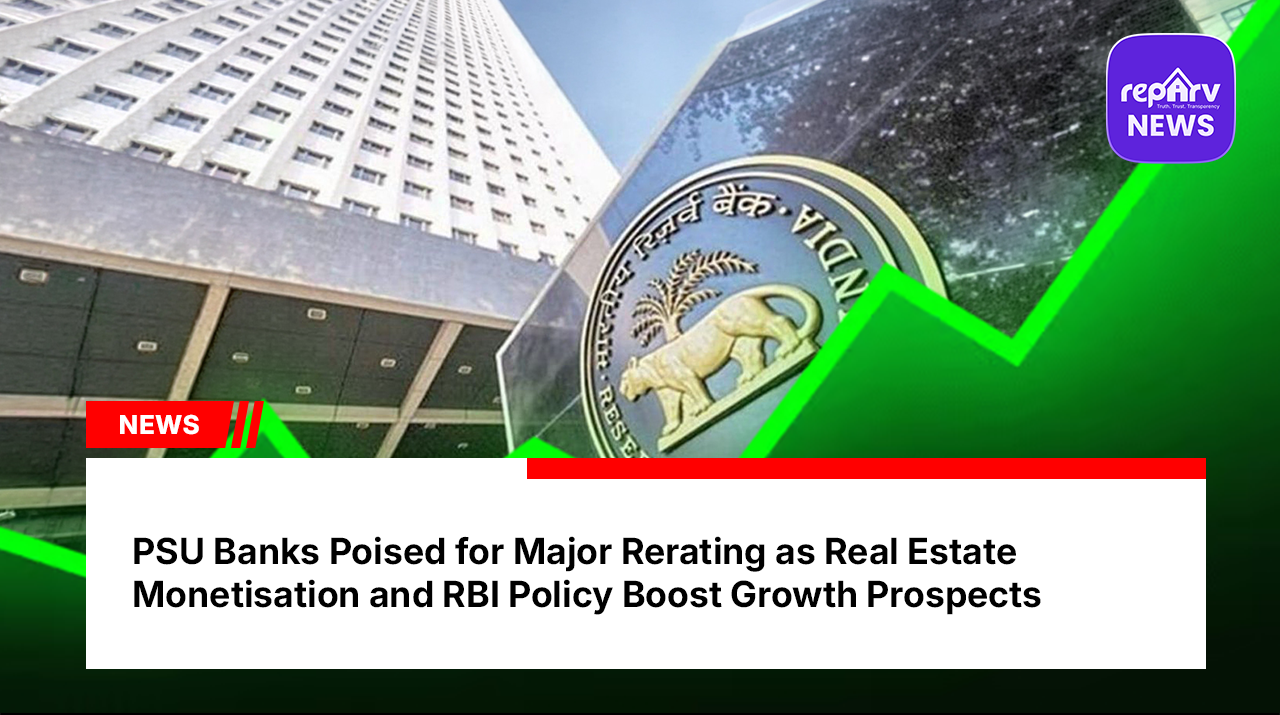
PSU banks in India have been identified as a renewed investment theme for investors and market analysts, as structural reforms in banking policies and real estate financing create the groundwork for a re-rating of the valuations of PSU banks. Deepak Shenoy, a market analyst, has pointed out that PSU banks are likely to achieve valuations of 1.5 times book value due to the improvement in profitability and balance sheets of the banks, with a monetization of the real estate holdings.
This re-evaluation holds particular relevance as PSU banks continue to deliver earnings momentum and expand their reach in critical lending markets. Analysts have observed that the space has truly moved beyond the asset quality issues that had impacted the valuation of the lenders, allowing investors to re-examine the public sector banks.
Over the last decade, PSU bank shares consistently traded at a discount to private sector banks. This was mainly due to fears of non-performing assets, capital adequacy issues, and governance constraints. But the recent trends in the financial results of these banks indicate that the earlier concerns are no longer valid. Financial Services Secretary M Nagaraju has confidently stated that PSU banks are on the path to achieving a combined profit of more than ₹2 lakh crore in FY26, aided by an increase in credit demand.
Public sector lenders have also gained traction in high-value retail lending. According to data from the industry experts, PSU banks have captured almost half of new home loan originations by value, ahead of private sector peers in a segment traditionally dominated by them. Improved pricing discipline, customer acquisition strategies, and execution ability are the factors reflected in this achievement by public sector peers.
This has occurred alongside a renewed drive to unlock capital from non-core assets, particularly real estate. One of the most significant catalysts that could fuel a rerating of PSU banks’ potential lies in their ability to monetise underutilised land and properties through structured financial instruments such as Real Estate Investment Trusts (REITs). The underutilised assets accumulated over decades on the balance sheets of PSU banks are yet to be monetised, as these assets remained idle with no return on investment, although these assets have high embedded value.
The trend has also been given a further fillip by policy support. The Union Budget encouraged asset recycling among public sector entities with an initiative that facilitates a REIT platform for central public sector enterprises. Though the focus is currently concentrated on infrastructure-intensive CPSEs, this has provided a roadmap for banks to explore this opportunity as well. This way, PSU banks can unlock their capital with real estate assets without consuming equity or requiring additional government support.
Further impetus to such a change has come in the form of parallel development of a new policy by the Reserve Bank of India. The central bank has recently permitted commercial banks to directly lend money to real estate investment trusts under specified prudential norms. Until now, the exposure of banks to real estate investment trusts was generally indirect and occurred only through special vehicles or instruments.
The new structure is likely to enhance liquidity in income-producing commercial properties, increase institutional investment in real estate, and provide a stable financing platform. The new framework is set to provide banks with an alternative platform to deploy their credit at a time when they can comply with regulations, which could be beneficial to asset yield in the future.
These developments, it is fair to say, are seen as evidence of the argument for higher valuation multiples. PSU banks currently trade at around book value. This, in the judgment of analysts, does not take account of the fact that the return ratios for these lenders have strengthened and their credit costs have fallen, and that they have healthier capital ratios well above those mandated by the regulator.
The key factor in this trend has been improved asset quality. Gross and net non-performing asset ratios have been on a steady decline over recent years across major PSU banks, thereby stabilising earnings and boosting investor confidence. This, together with disciplined credit underwriting and diversified loan books, has enhanced the sustainability of profitability.
Analysts, however, add that the rerating thesis is not without its risks. Deposit growth remains uneven across the sector, and if not well-managed, it could pressure the net interest margin and accelerate funding costs.
There is also execution risk, especially when it comes to monetizing real estate assets. How quickly banks can structure, list, or scale REIT platforms will be determined by market conditions, asset quality, and regulatory clearances. Regional disparities in the demand for real estate will also influence outcomes.
Despite all these challenges, the outlook for PSU banks, in general, appears much stronger compared to previous cycles. With cleaner balance sheets, positive policy messages, and several options available to achieve capital efficiency, PSU banks are increasingly considered to be a relevant players in the financial growth narrative in India.
As the overall ecosystem of banking and real estate develops side by side in India, PSU sector banks are poised at a significant juncture. Although there is no certainty that a rerating towards 1.5 times of their book value can be achieved, the general nature of policy reforms and assets being monetised must be watched carefully by investors and experts alike.






.webp)

.webp)
.webp)


.webp)




.webp)
.webp)
.webp)
.webp)



















.webp)
.webp)


.webp)

.webp)
.webp)
.webp)
.webp)
.webp)
.webp)
.webp)





































.jpeg)