

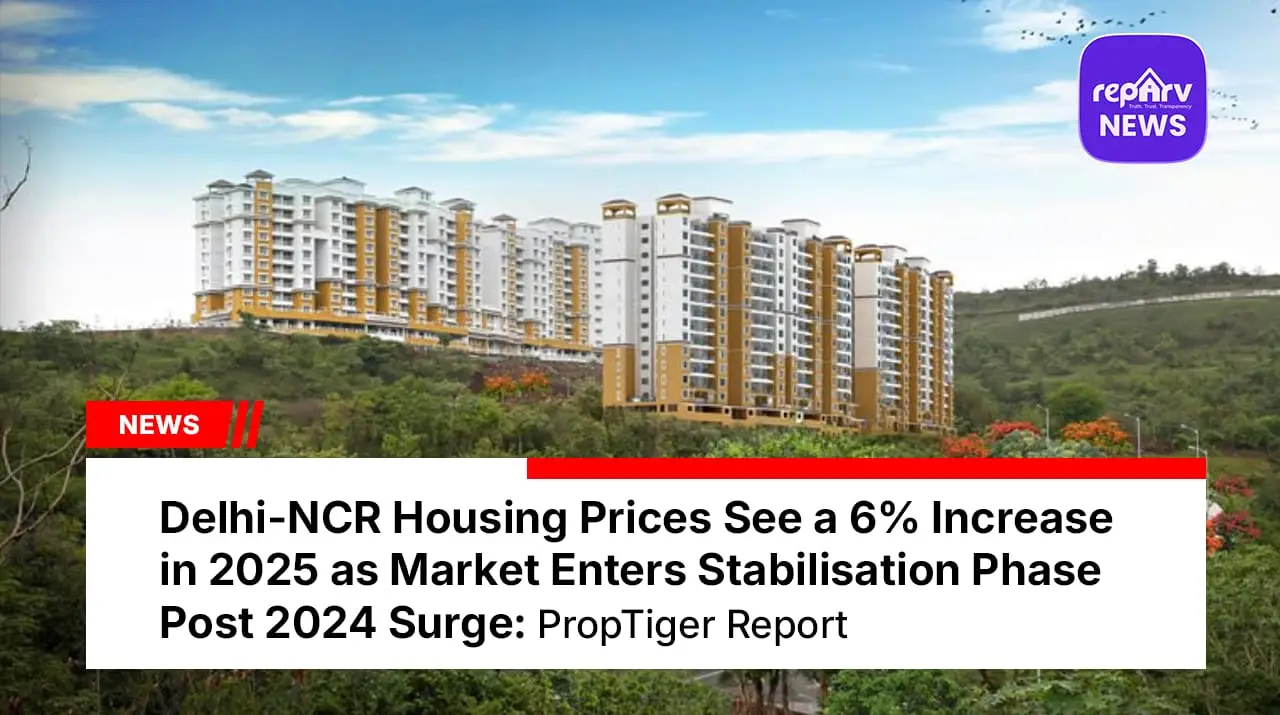
The average residential property price in Delhi-NCR has showed 6% increase in 2025 over the previous year, marking the beginning of a stabilisation phase in one of the most prominent real estate markets in India, as per the latest report by PropTiger.
The average price of a residential property in Delhi-NCR stood at around ₹8,105 per square foot in 2024, which increased to ₹8,570 per square foot in 2025. Although the rise in prices indicates that the Delhi-NCR real estate market continues to perform well, it is a significant drop from the 49% YoY surge witnessed in 2024.
For property investors, homebuyers, and developers in New Delhi, Gurugram, Noida, Greater Noida, Ghaziabad, and Faridabad, the 6% appreciation indicates a transition from a fast-paced post-pandemic trajectory to a more sustainable growth pattern fueled by end-user demand.
According to the PropTiger housing market report, the price rise in the top eight residential markets in India also moderated to 6% in 2025, down from double-digit growth in the previous years. The Delhi-NCR market shows strong demand for both luxury and mid-segment residential properties, which exists primarily in areas with developed infrastructure.
The most popular investment areas include Golf Course Road, Dwarka Expressway, and the emerging sectors of New Gurugram. Connectivity to expressways and commercial areas continues to be a major factor influencing property prices in Noida and Greater Noida. Established areas in South and West Delhi also see steady transaction volumes despite the moderated growth.
According to industry experts, sales volume in the housing market has slightly decreased in 2025 compared to the highest record seen earlier, but prices remain unchanged. This indicates that the housing market is being handled carefully by the developers, who have now started launching new projects in accordance with demand trends rather than relying on buying trends. Controlled inventory has ensured that there are no corrections in the housing prices in the Delhi-NCR market.
The high costs of construction materials such as cement, steel, and labour continue to impact pricing decisions. For an investor studying the Delhi-NCR real estate market as a long-term investment class, the 6% appreciation in prices per annum provides a relatively clearer picture. The capital management process receives better results through single-digit appreciation because it produces sustainable profits that exceed single-digit and steep appreciation. The continuing demand for rentals in Gurugram and Noida commercial micro-markets generates an investment opportunity that shows no signs of decline.
The report also places Delhi-NCR in a comparative framework with other major metropolitan cities. The Mumbai Metropolitan Region showed lower growth than Bengaluru, which achieved double-digit price increases to become the top market for price growth in 2025. Pune registered marginal growth, and the Chennai market remained stagnant. In this scenario, the performance of Delhi-NCR is balanced and not overheated.
Infrastructure development is a major catalyst for real estate development in the Delhi-NCR region. Development of the metro network, expressways, and commercial office spaces in Gurugram and Noida has strengthened employment-related housing demand. Better connectivity between Delhi and the surrounding districts of Uttar Pradesh and Haryana continues to be a long-term driver for residential property value appreciation.
From a buyer’s perspective, the market conditions are more favourable and stable compared to 2024. Although property prices are higher compared to earlier years, panic buying has decreased. Developers have introduced organised payment schemes and selective discounts, especially in new residential launches.
Financial institutions and housing finance companies are reporting a stable mortgage market in the Delhi-NCR region, although the lending norms are still cautious. The interest rate movements will be a decisive factor in the demand for housing in the second half of 2025. A stable interest rate scenario may also boost the growth of the residential real estate market in the region.
The Delhi-NCR residential real estate market is likely to report single-digit growth, as opposed to the double-digit growth witnessed in the past. The market fundamentals indicate a mature market with stable demand, controlled supply, and infrastructure-led growth.
Although the 6% increase in Delhi-NCR property prices in 2025 may be less than last year’s surge, it is an indication of the market’s ability to resist the forces of disequilibrium and instead move towards a state of balance.






.webp)
.webp)
.webp)

.webp)


.webp)
.webp)
.webp)
.webp)

















.webp)
.webp)


.webp)

.webp)
.webp)
.webp)
.webp)
.webp)
.webp)
.webp)


































.jpeg)